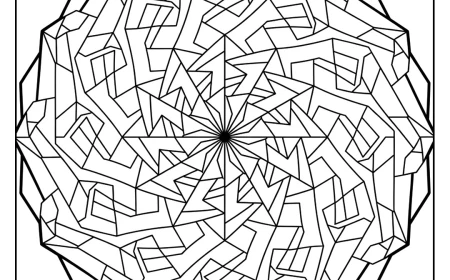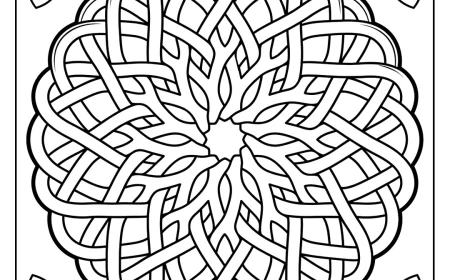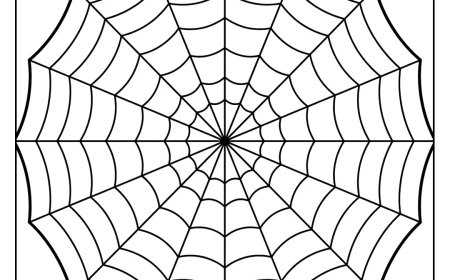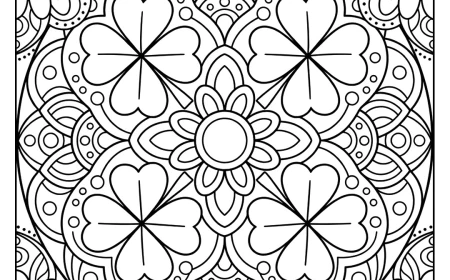
Free printable Tibetan mandala PDFs offer an accessible, transformative gateway to ancient Eastern spirituality and modern stress relief. Historically utilized by Buddhist monks as sacred maps of the universe and visual aids for deep meditation, these intricate geometric configurations are now widely available for anyone to download and print at home.
To get started on your creative journey, you can easily download high-quality, print-ready files from dedicated platforms like SuperColoring's Mandala Hub or the JustColor Tibet Collection. These open-access digital libraries feature an extensive variety of designs, ranging from bold, simplified patterns perfect for absolute beginners to incredibly detailed, expert-level architectural arrays. Because these files are formatted as clean PDFs, you can print them cleanly on your choice of heavy cardstock or standard printer paper. Grab your favorite colored pencils, fine-liner pens, or brush markers, and transform your quiet afternoon into a deeply relaxing, meditative retreat.
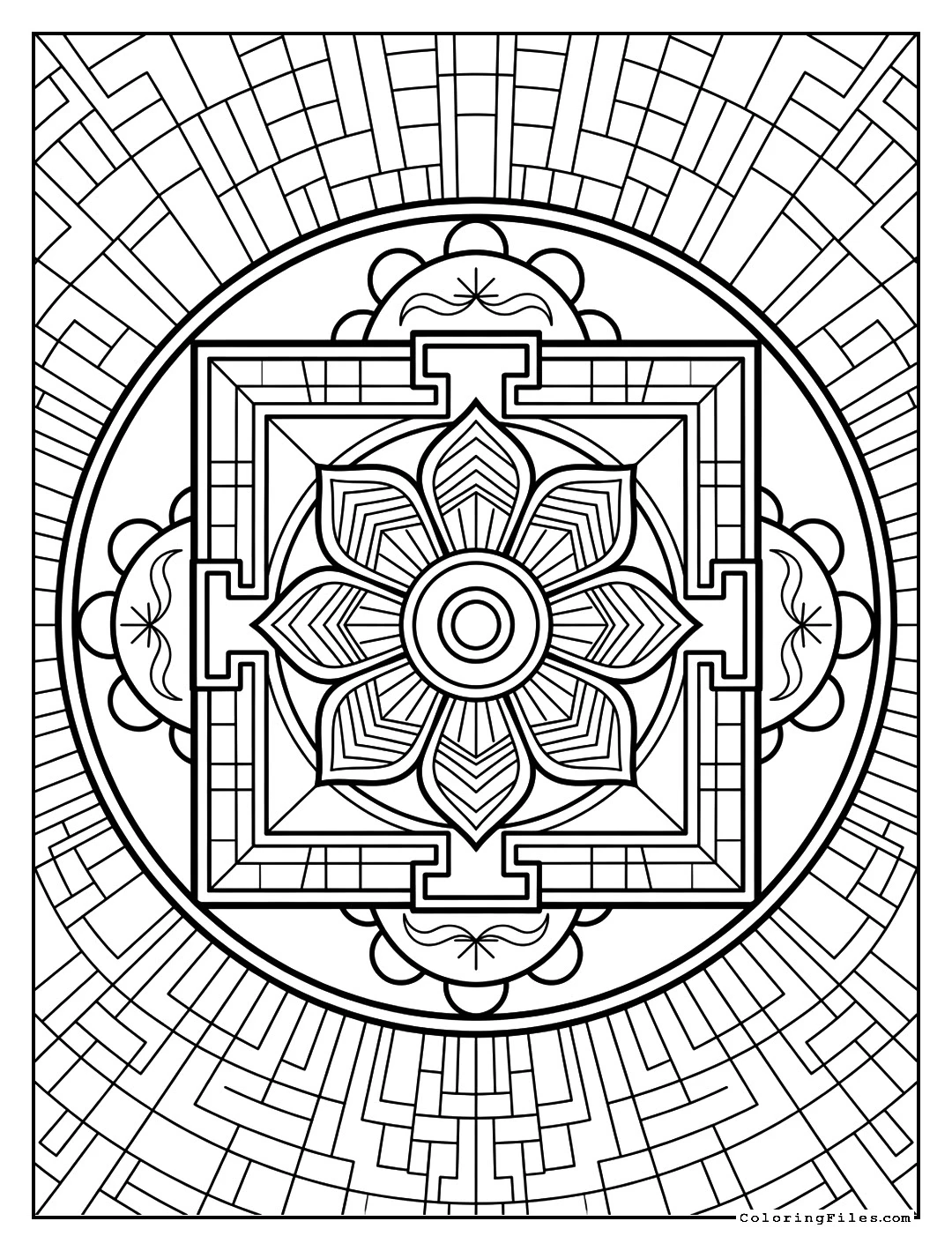
Cosmic Palace Mandala
Represents the celestial residence of enlightened deities. The square walls and four grand gates symbolize the boundaries of pure, sacred space.
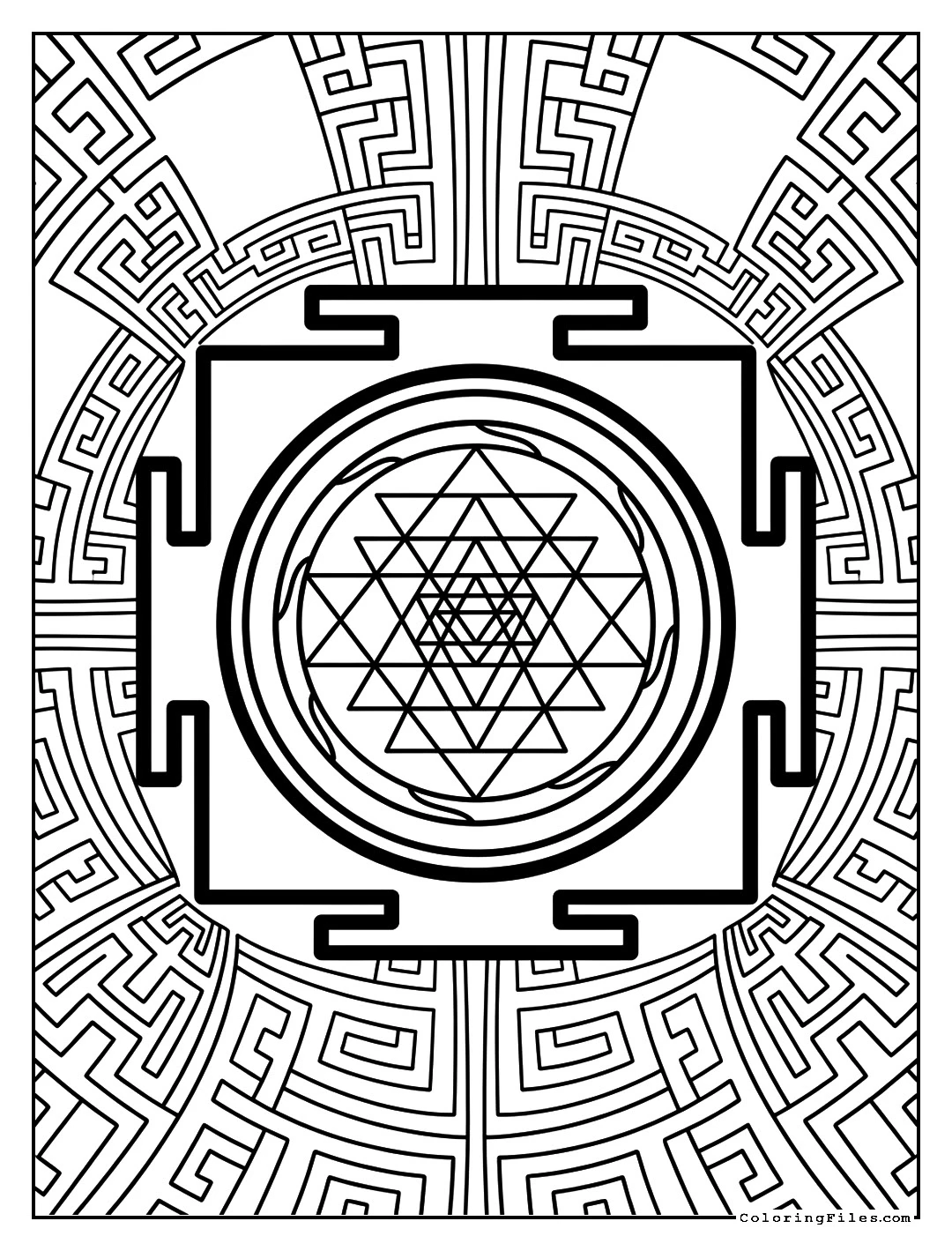
Square Fort of Peace
Features the traditional four-sided palace structure. It symbolizes absolute stability, balance, and the secure ground needed for deep meditation.
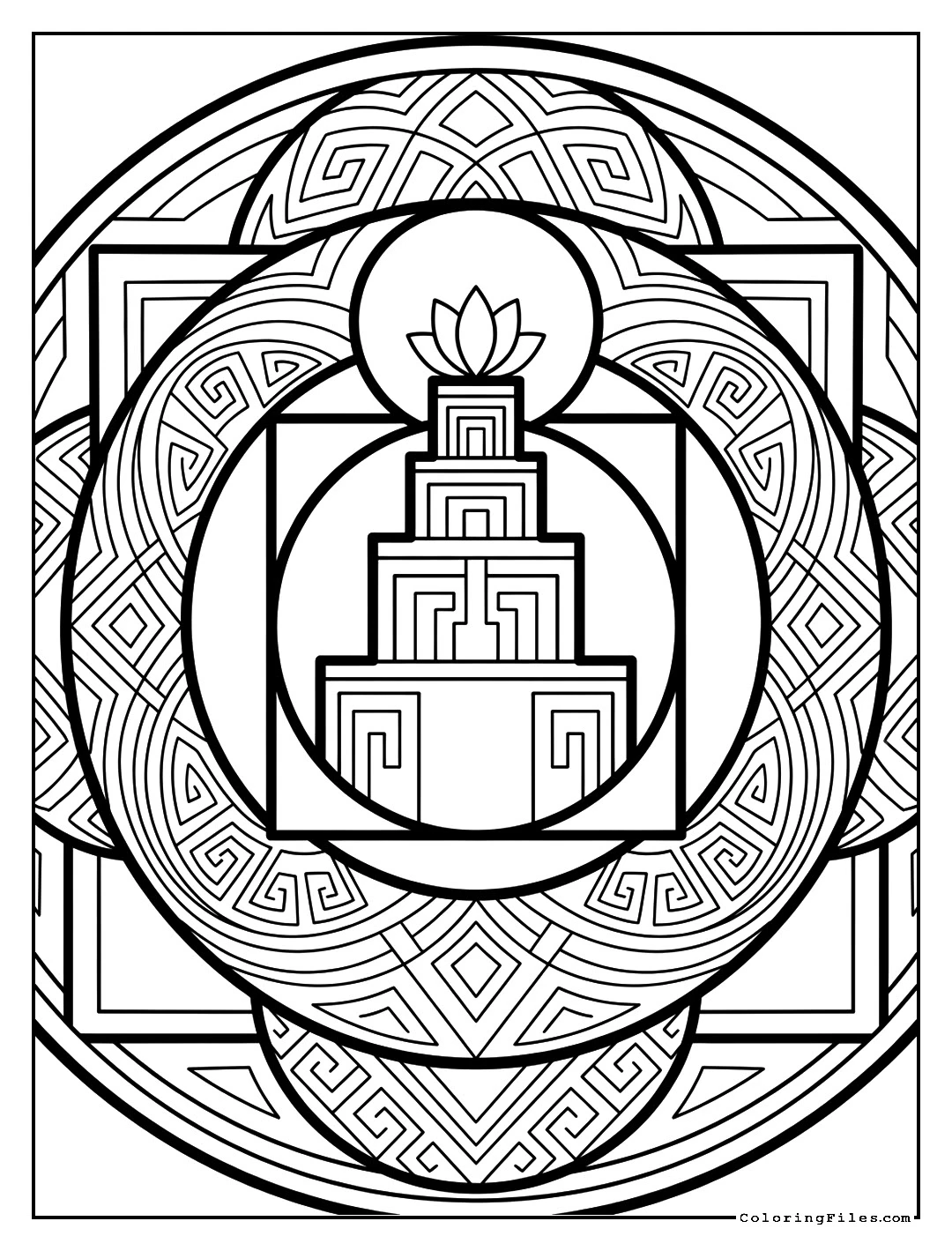
Mount Meru Cosmic Axis
Depicts the sacred five-peaked mountain of Buddhist cosmology. It represents the center of the physical and spiritual universe.
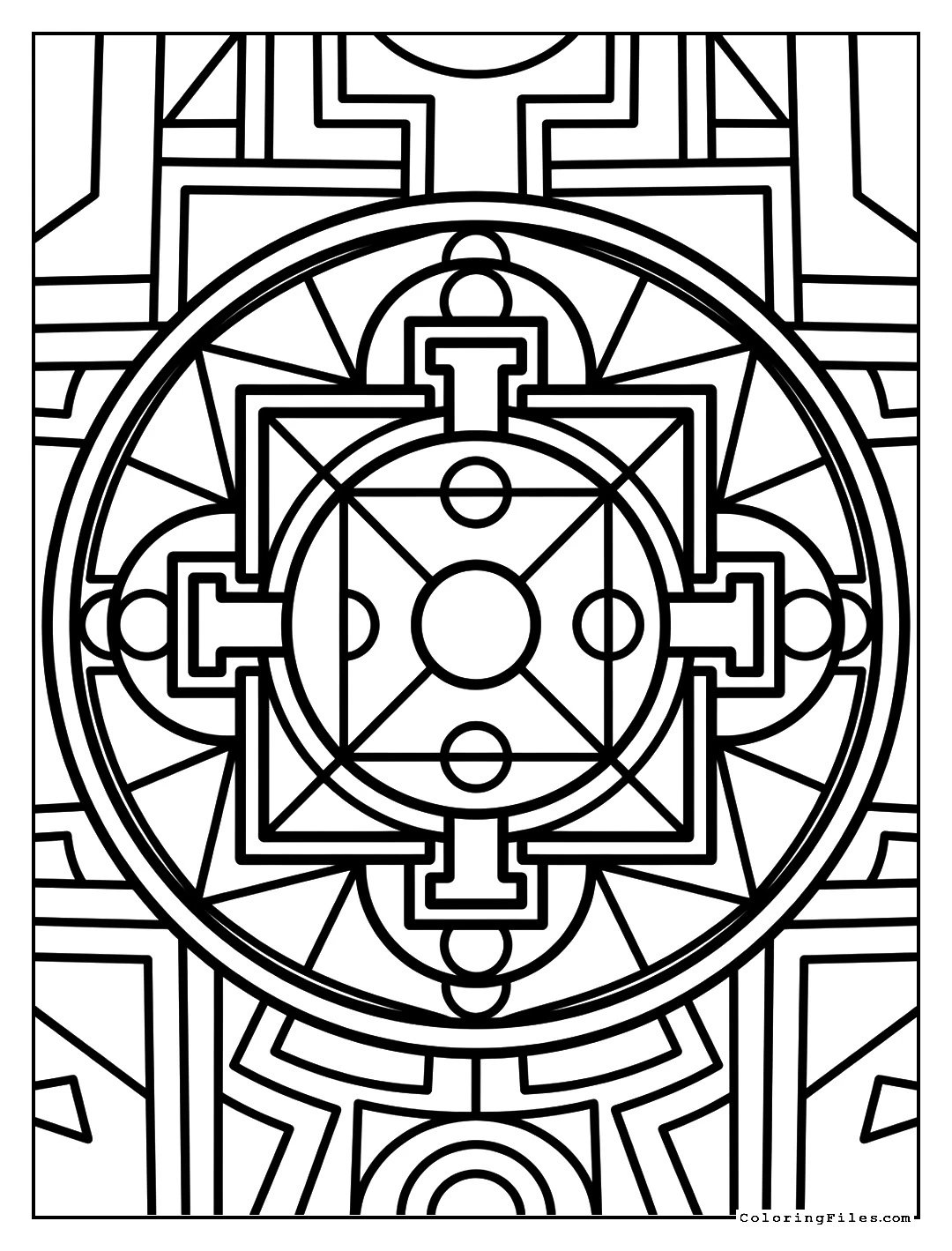
Four Gates of Liberation
Focuses on the grand entryways of the sacred palace. They symbolize the four boundless virtues: loving-kindness, compassion, joy, and equanimity.
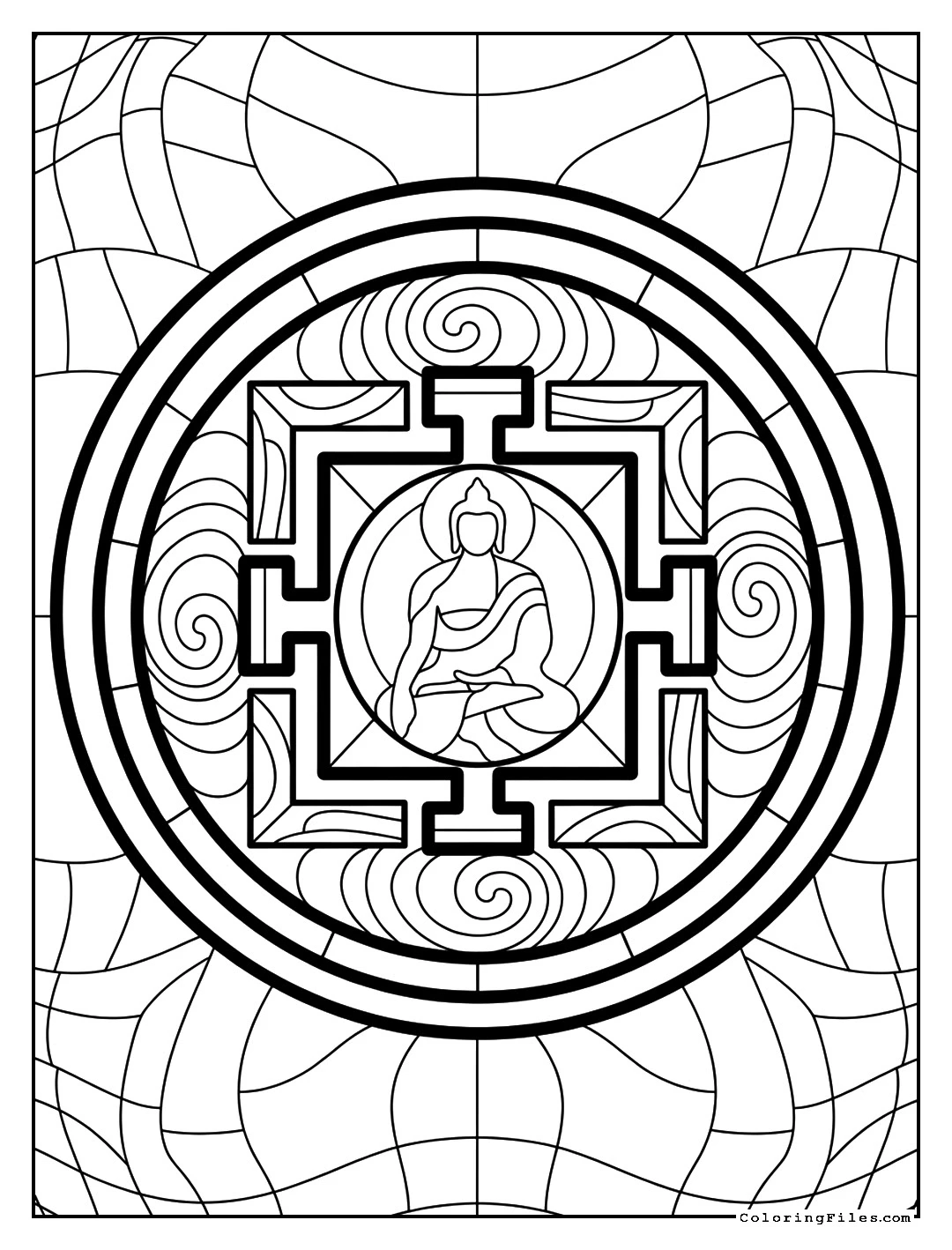
Outer Fire Barrier
Ringed by blazing flames of wisdom. This perimeter symbolizes the burning away of ignorance and impurities before entering sacred space.
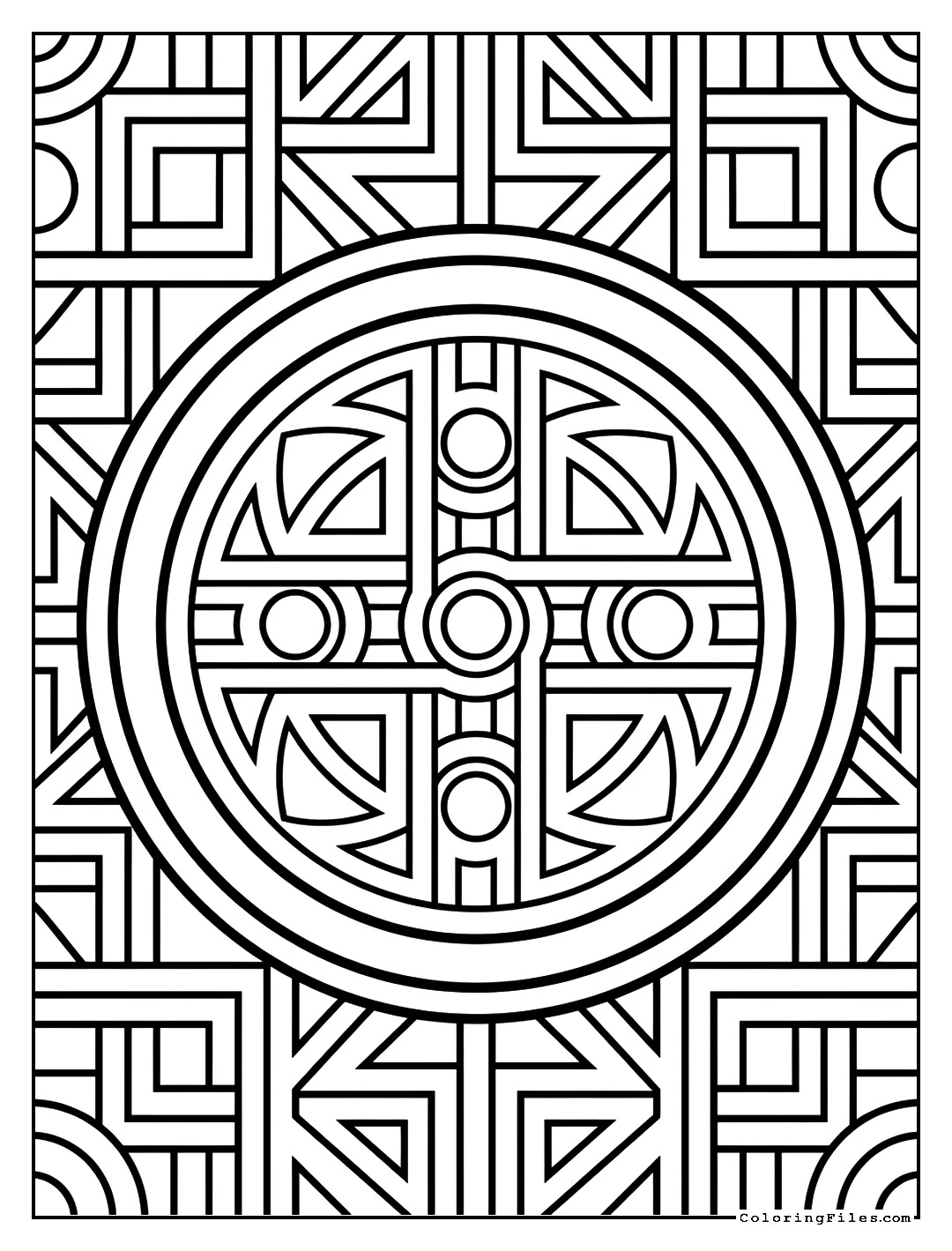
Inner Sanctuary Outline
Focuses on the innermost square of the mandala. It represents the ultimate destination of the spiritual journey: pure, undisturbed awareness.
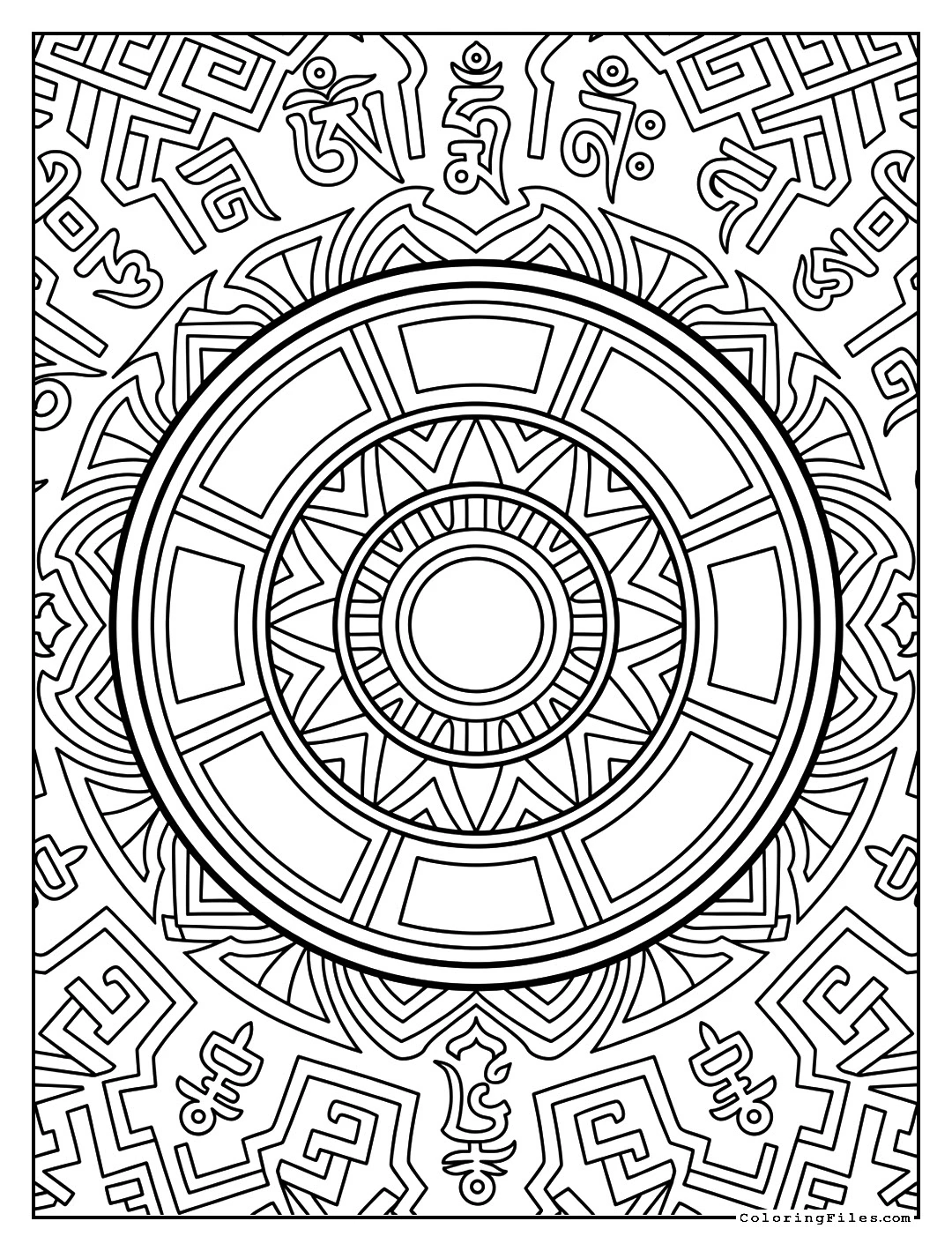
Concentric Circles of Truth
Multiple circular layers radiating outward. They symbolize the infinite, continuous nature of reality and the progressive stages of enlightenment.
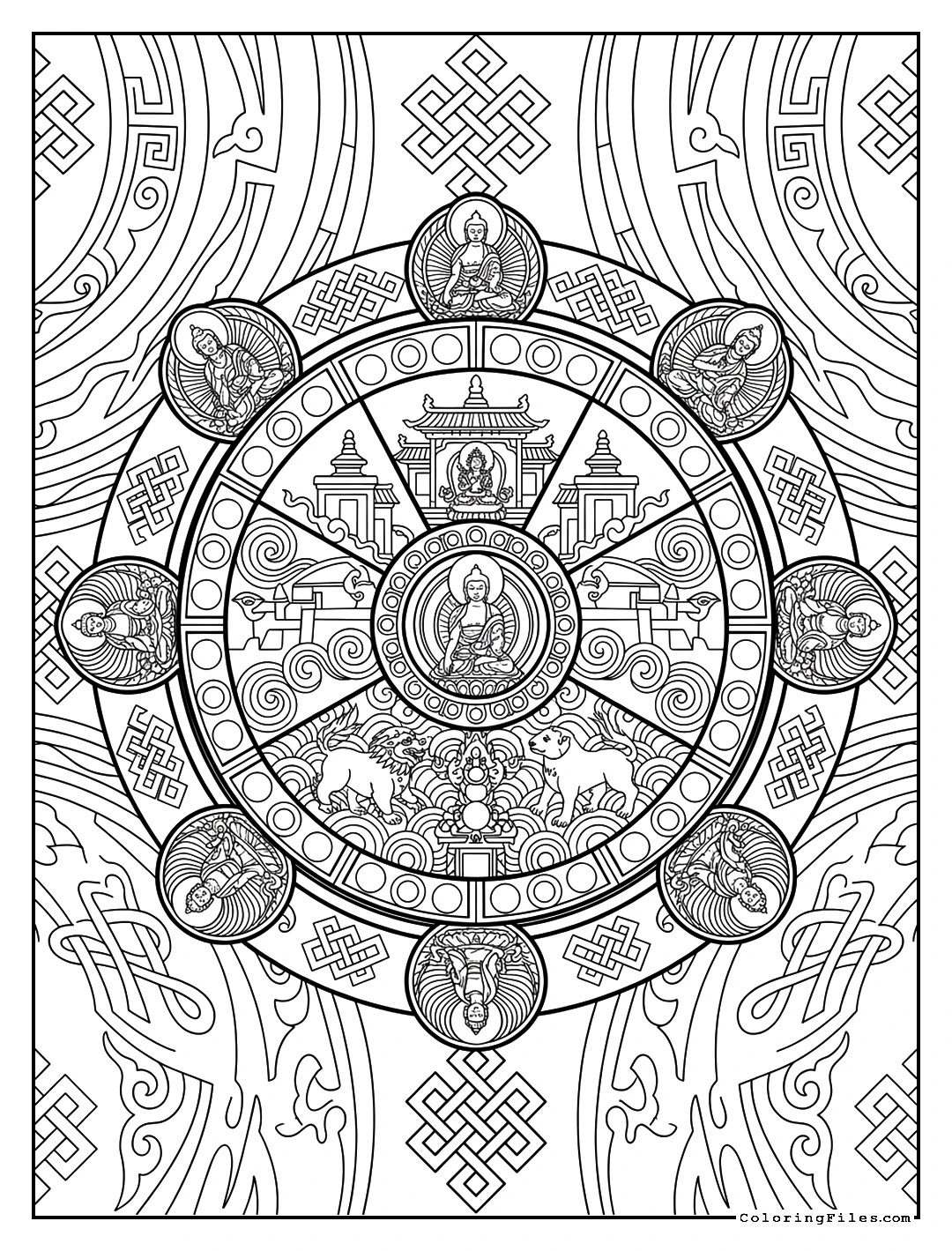
Celestial Fortress Wheel
A complex, fortress-like geometric grid. It symbolizes the orderly, structured perfection of the enlightened mind overcoming earthly chaos.
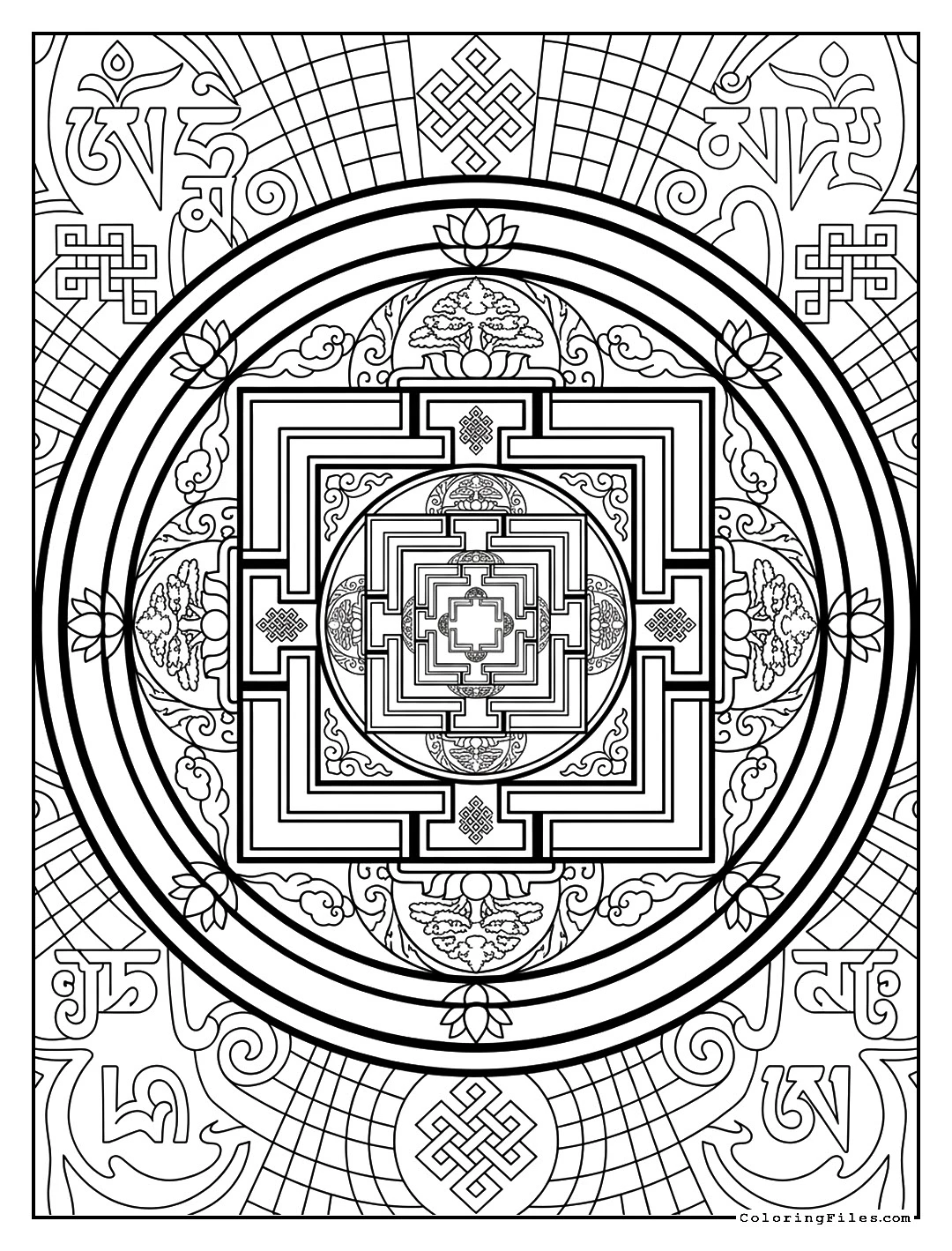
Pure Realm Architecture
Intricate blueprints of a Buddha's pure land. It visualizes an idealized environment completely free from suffering, greed, and delusion.
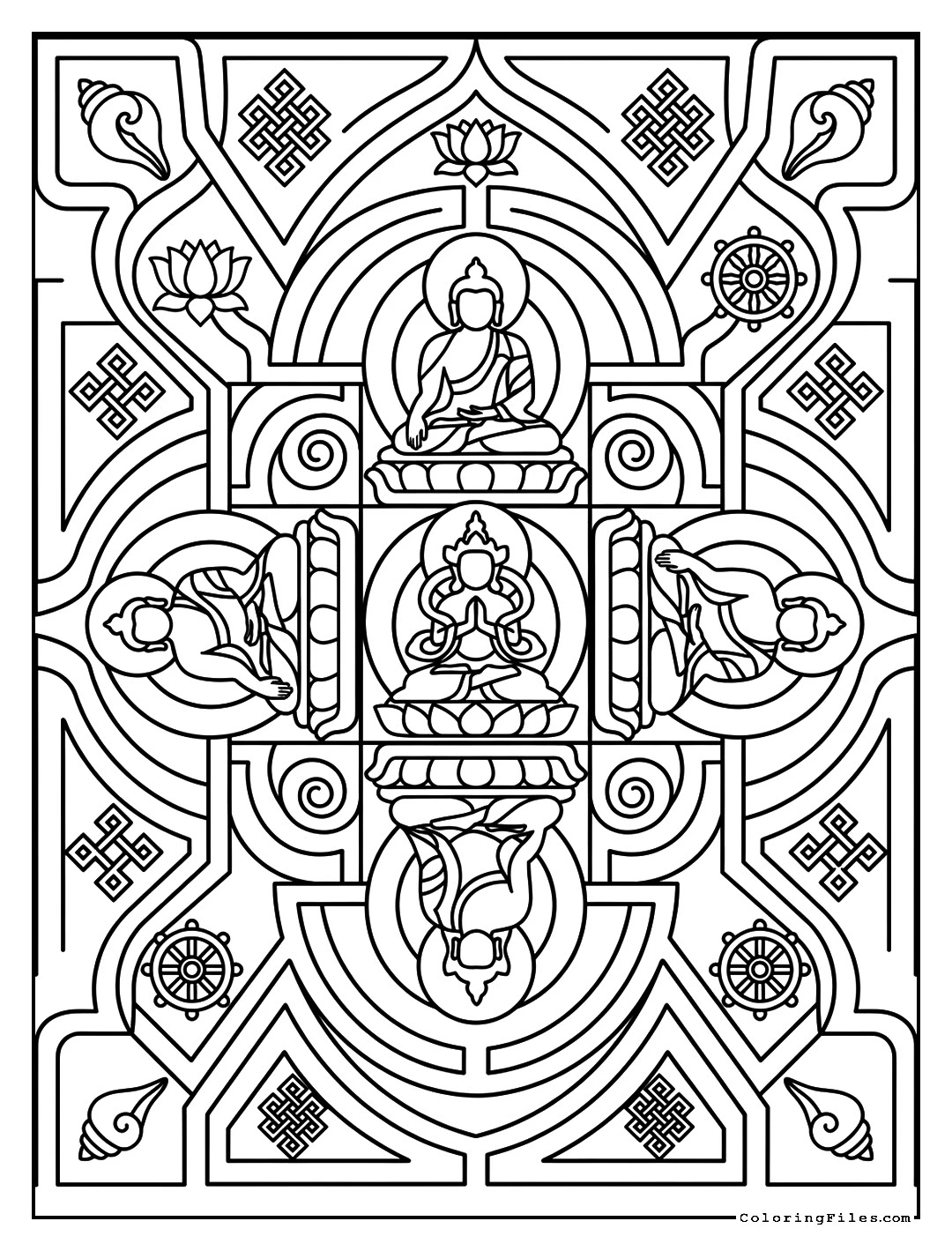
Five-Deity Mandala Grid
A geometric cross layout splitting the center into five sections. It symbolizes the integration of five distinct types of sacred wisdom.
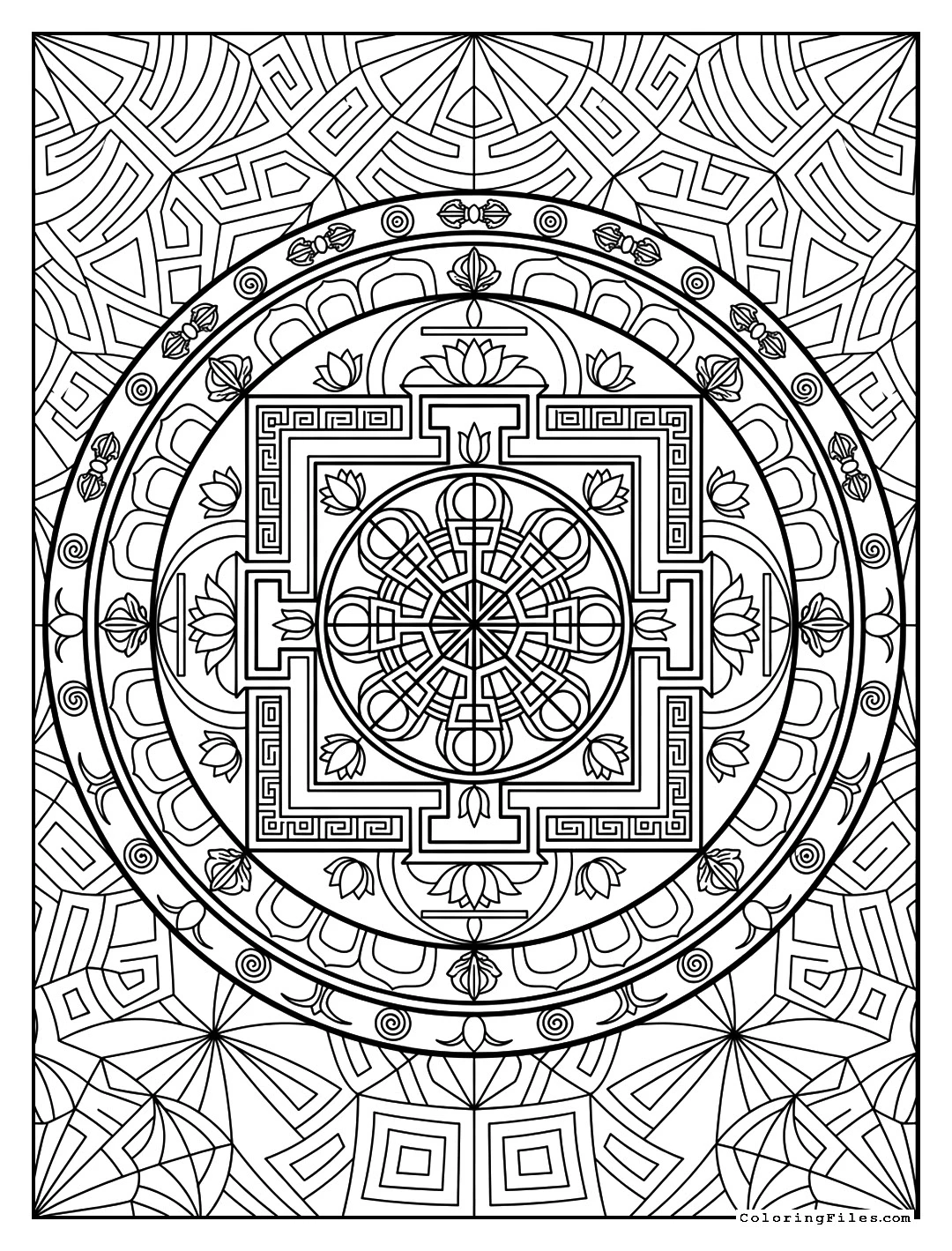
Eternal Symmetry Matrix
Perfectly balanced, repeating geometric lines. It reflects the universal law of karma and the perfect harmony of cosmic order
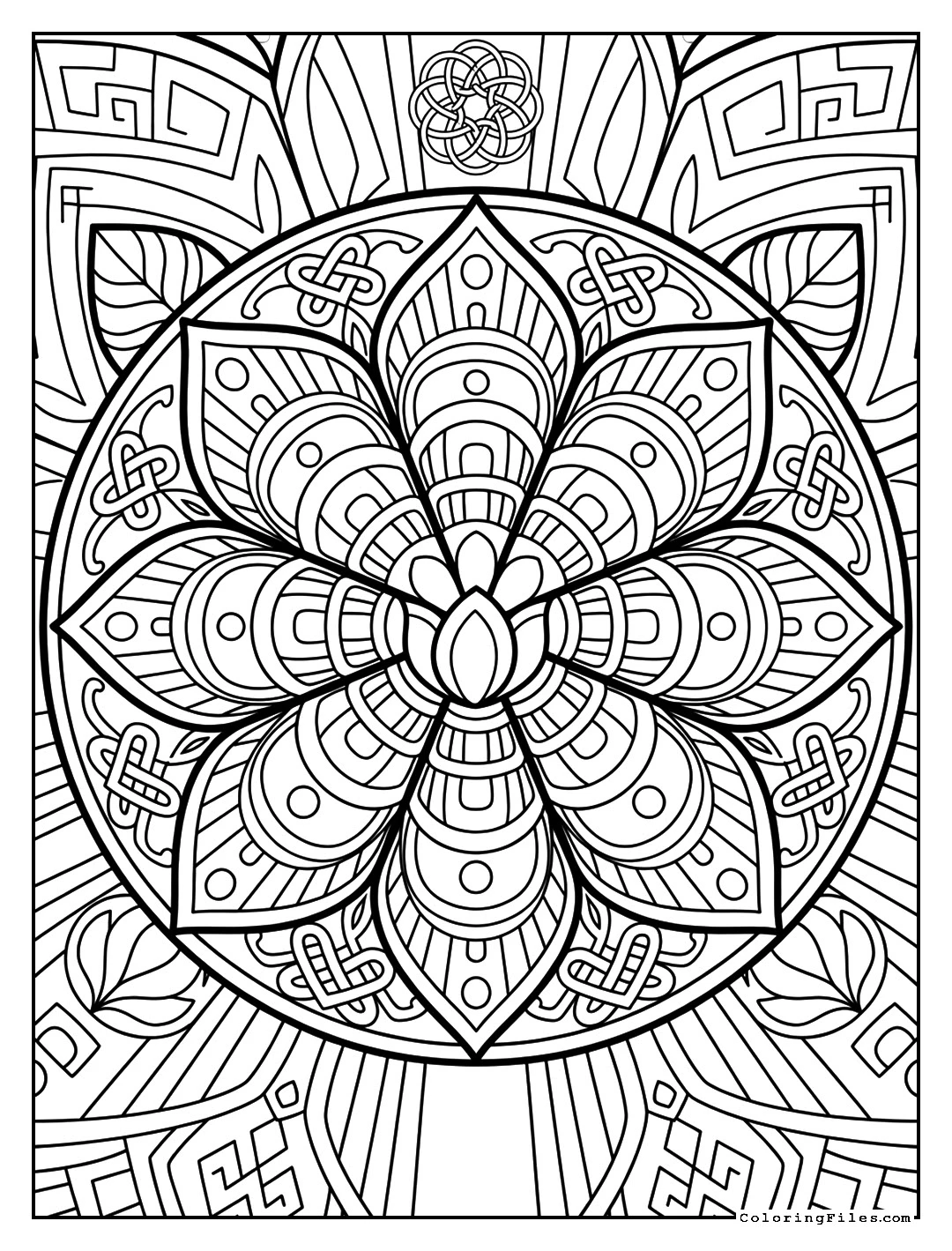
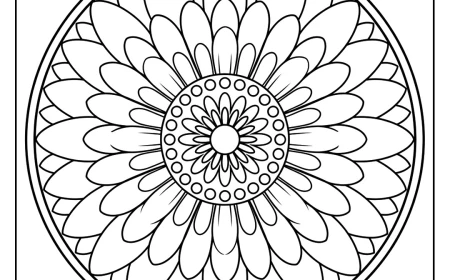
Sacred Lotus Petal
Features expanding concentric rings of lotus petals. It symbolizes the gradual unfolding of spiritual growth and the awakening of the soul.
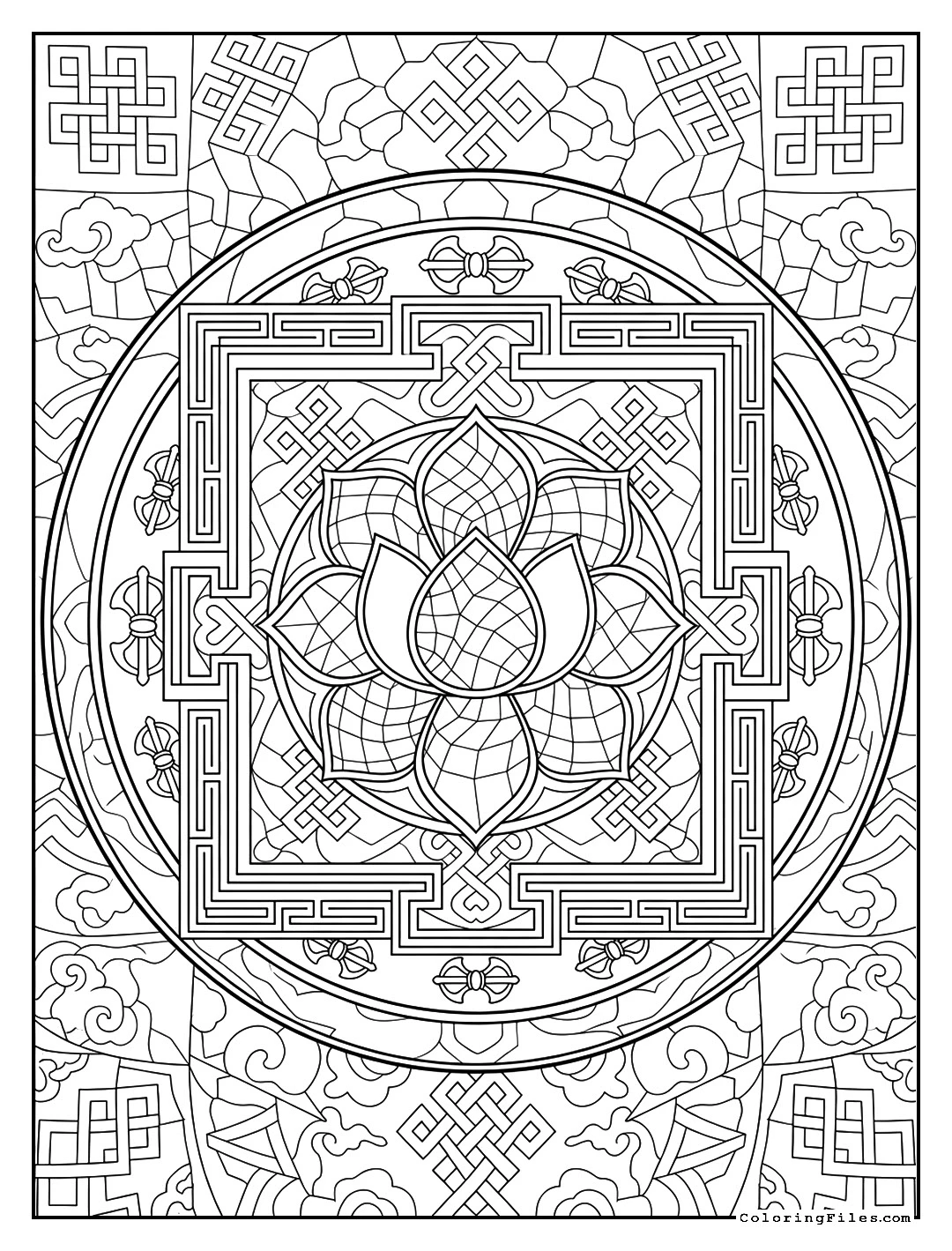
Blossom of Pure Mind
A central blooming flower design. It represents the natural purity of the mind, which rises untainted above the muddy waters of worldly suffering.
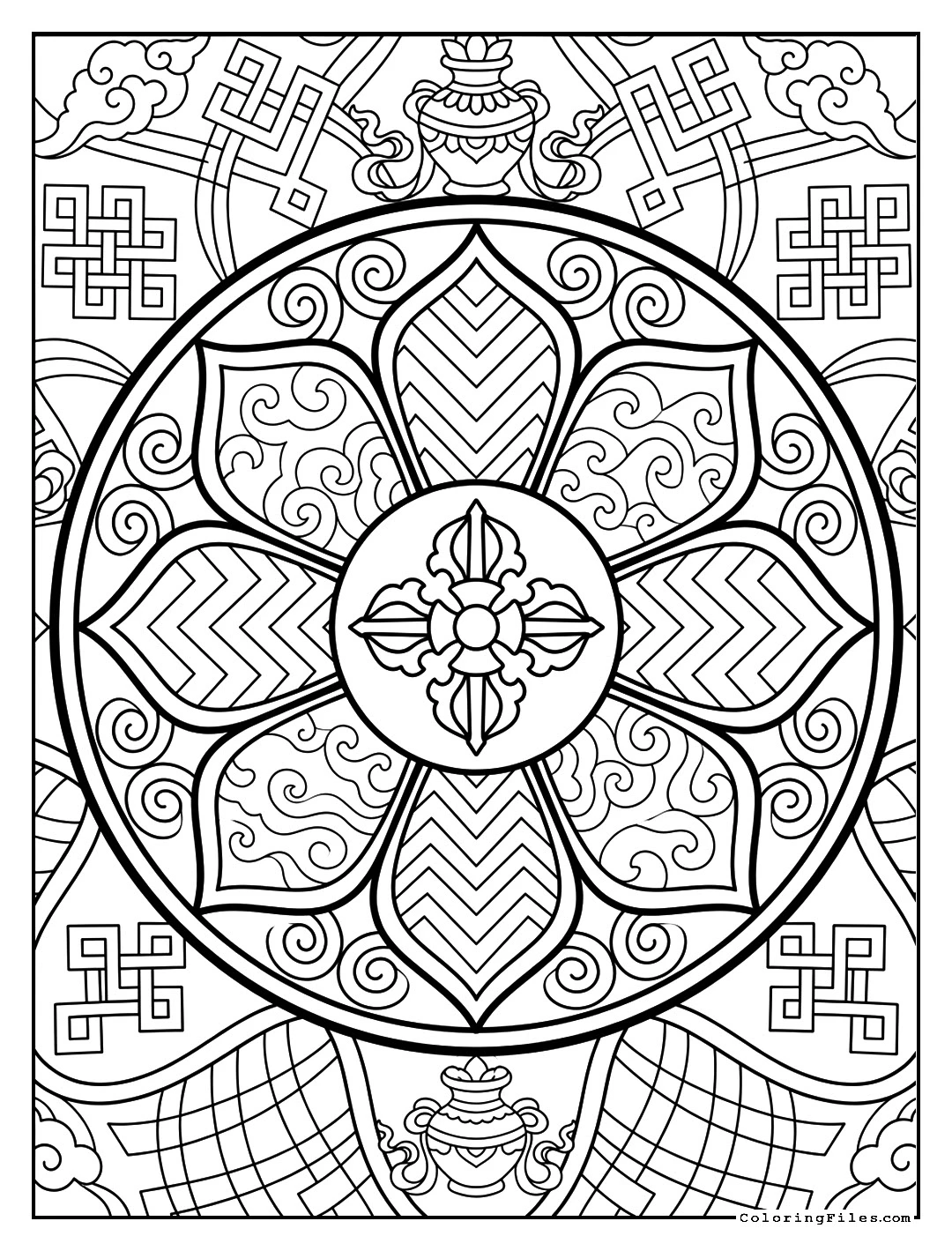
Eight-Petaled Lotus Wheel
A flower with eight distinct petals. It represents the Buddha’s Noble Eightfold Path, guiding practitioners toward ethical and mindful living.
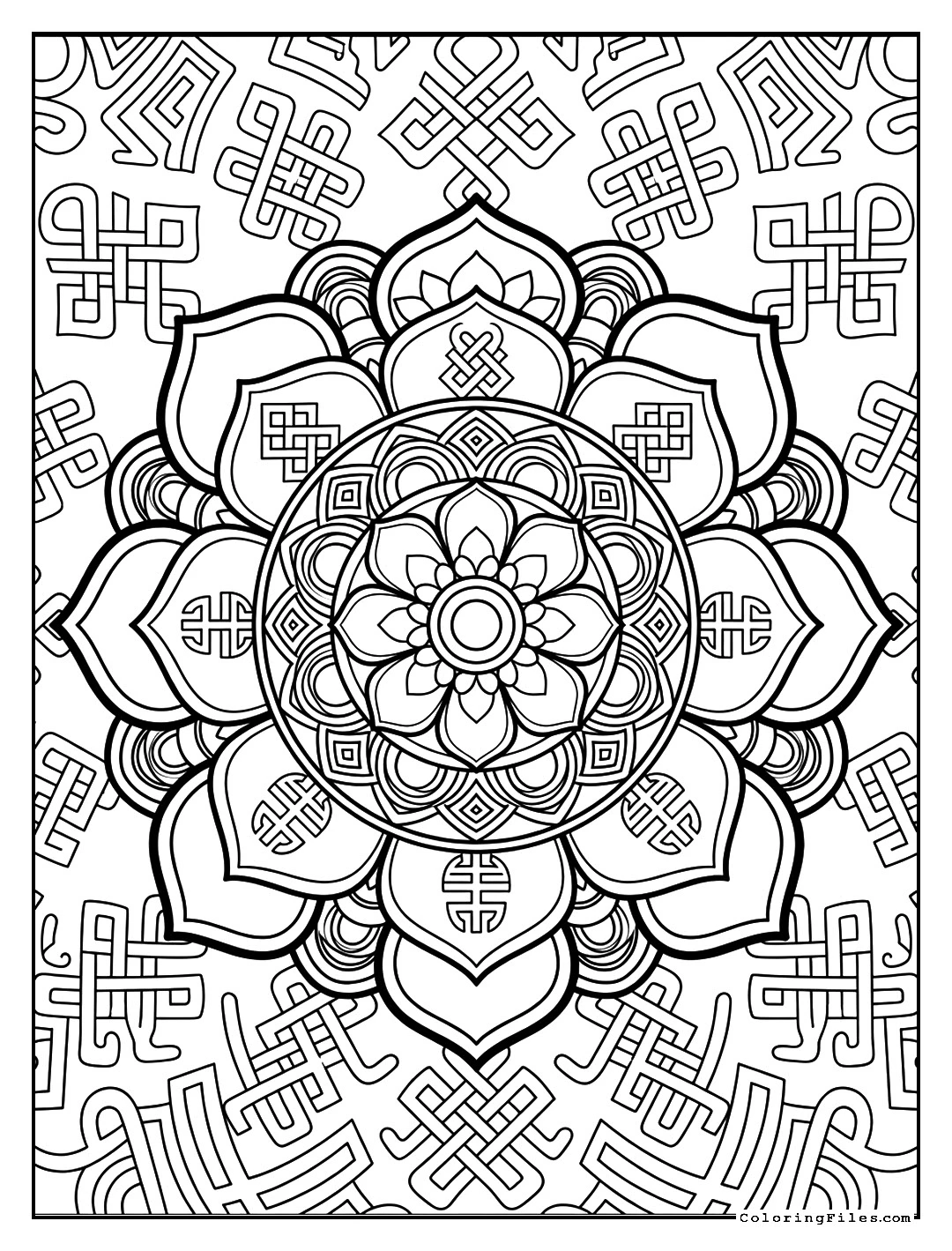
Floral Ring of Impermanence
Repeating patterns of delicate vines and blossoms. It serves as a beautiful reminder of nature's constant cycles of growth, decay, and rebirth.
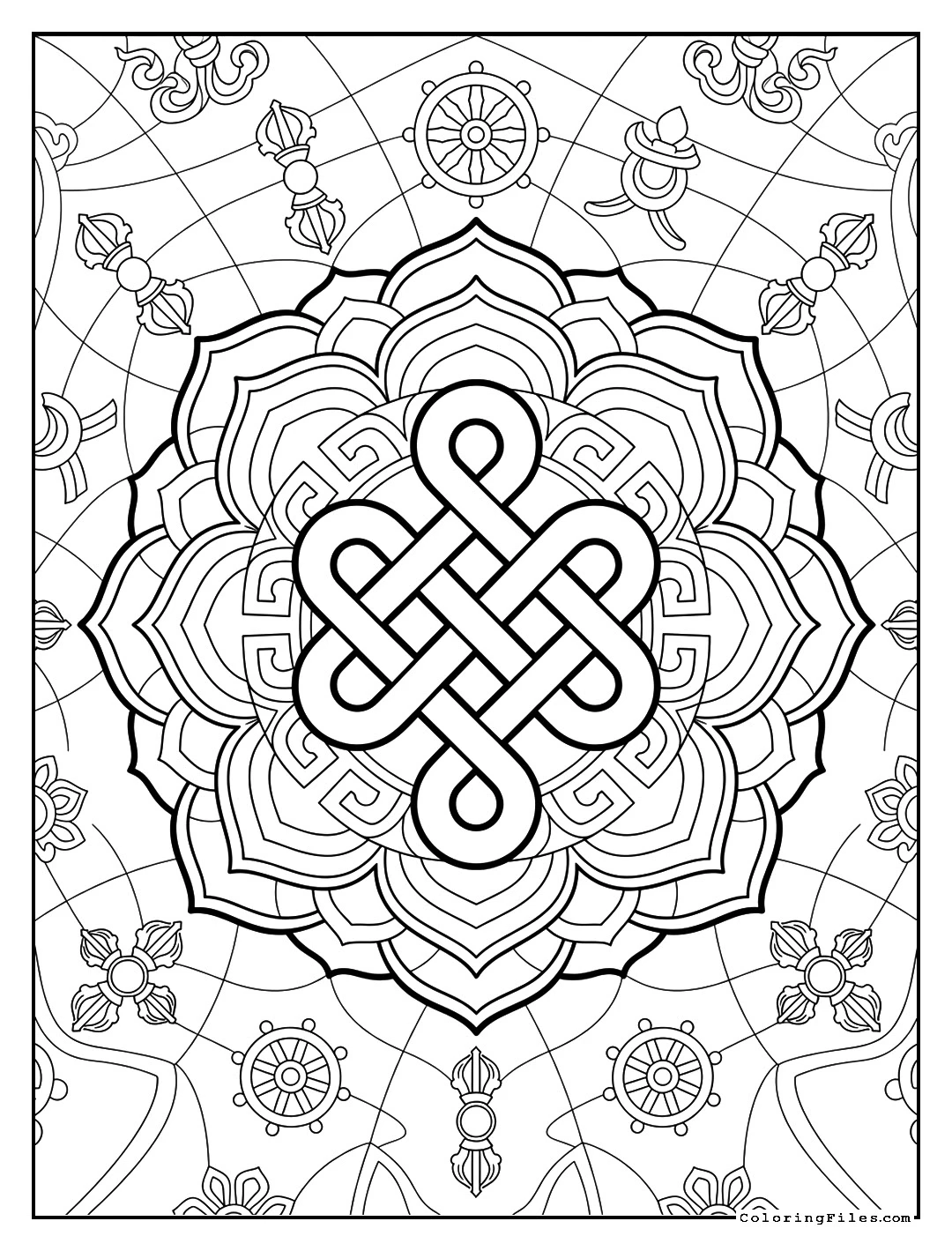
Infinite Knot
Centers on the continuous, unbroken lucky knot. It symbolizes the endless interplay of cause and effect, and the union of wisdom and compassion.
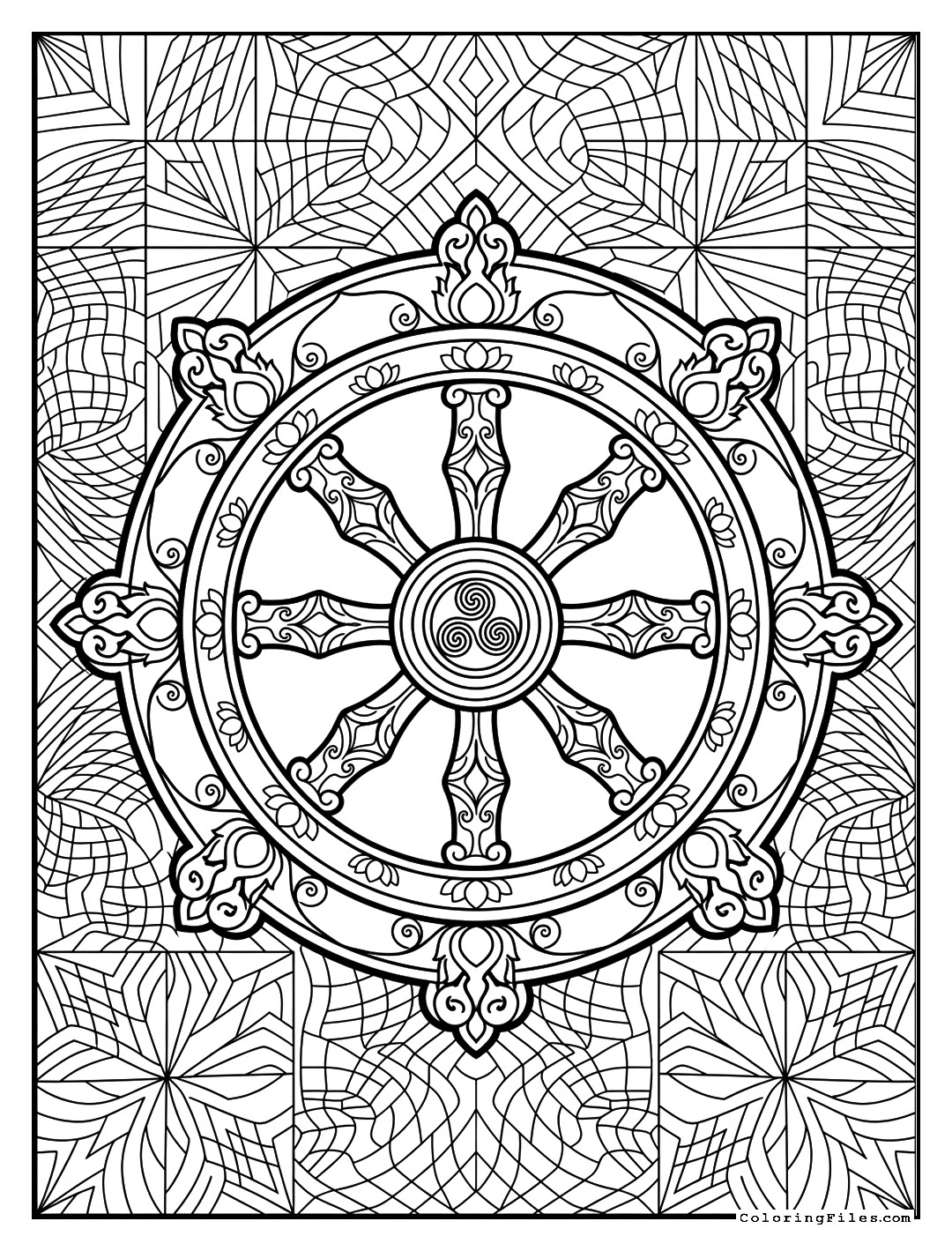
Wheel of Dharma
Features the sacred eight-spoked wheel. It represents the continuous turning of the Buddha's teachings across the world to end suffering.
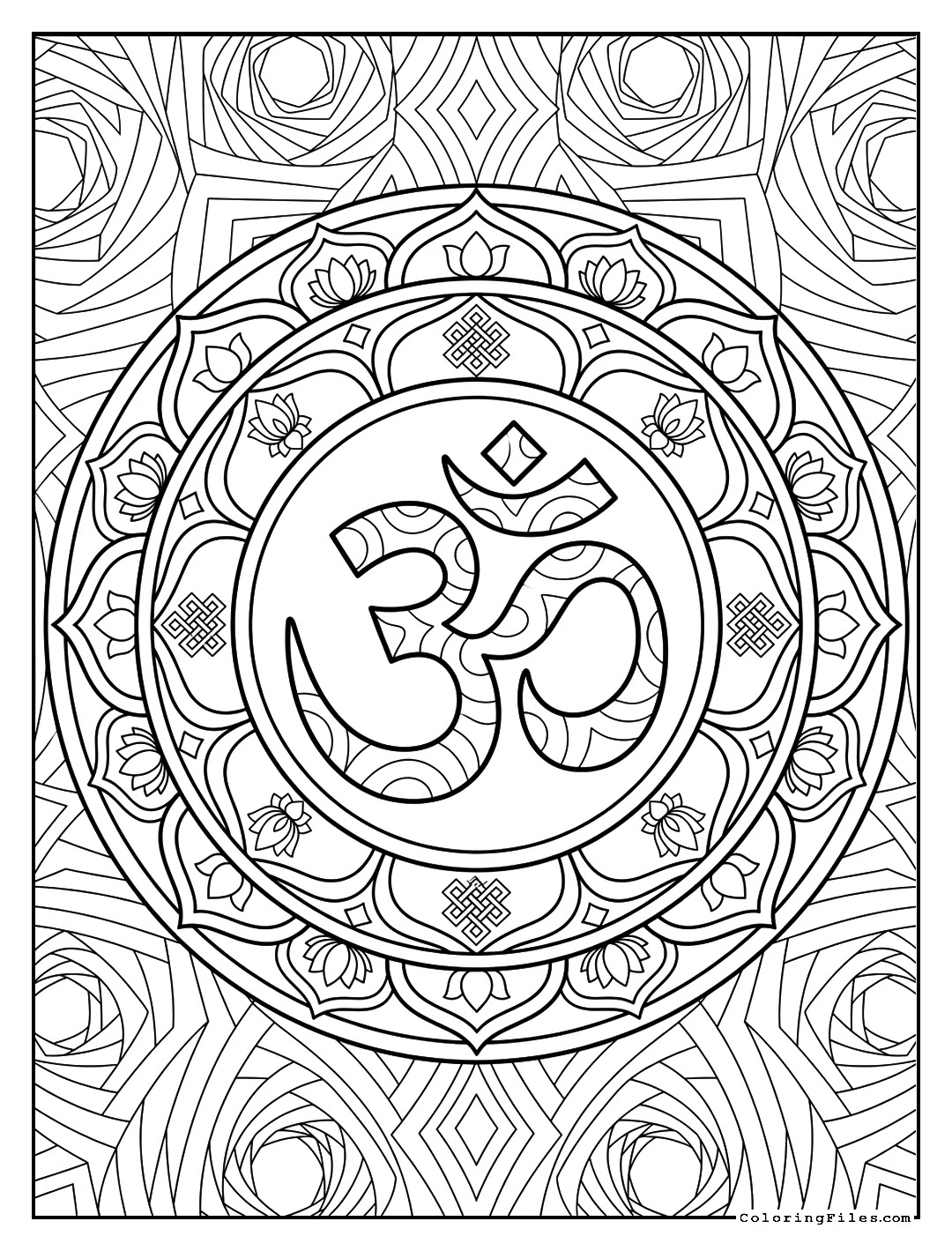
Sacred Om Syllable
Centers around the holy Tibetan script for "Om". It symbolizes the primordial sound of the universe and the ultimate reality of all existence.
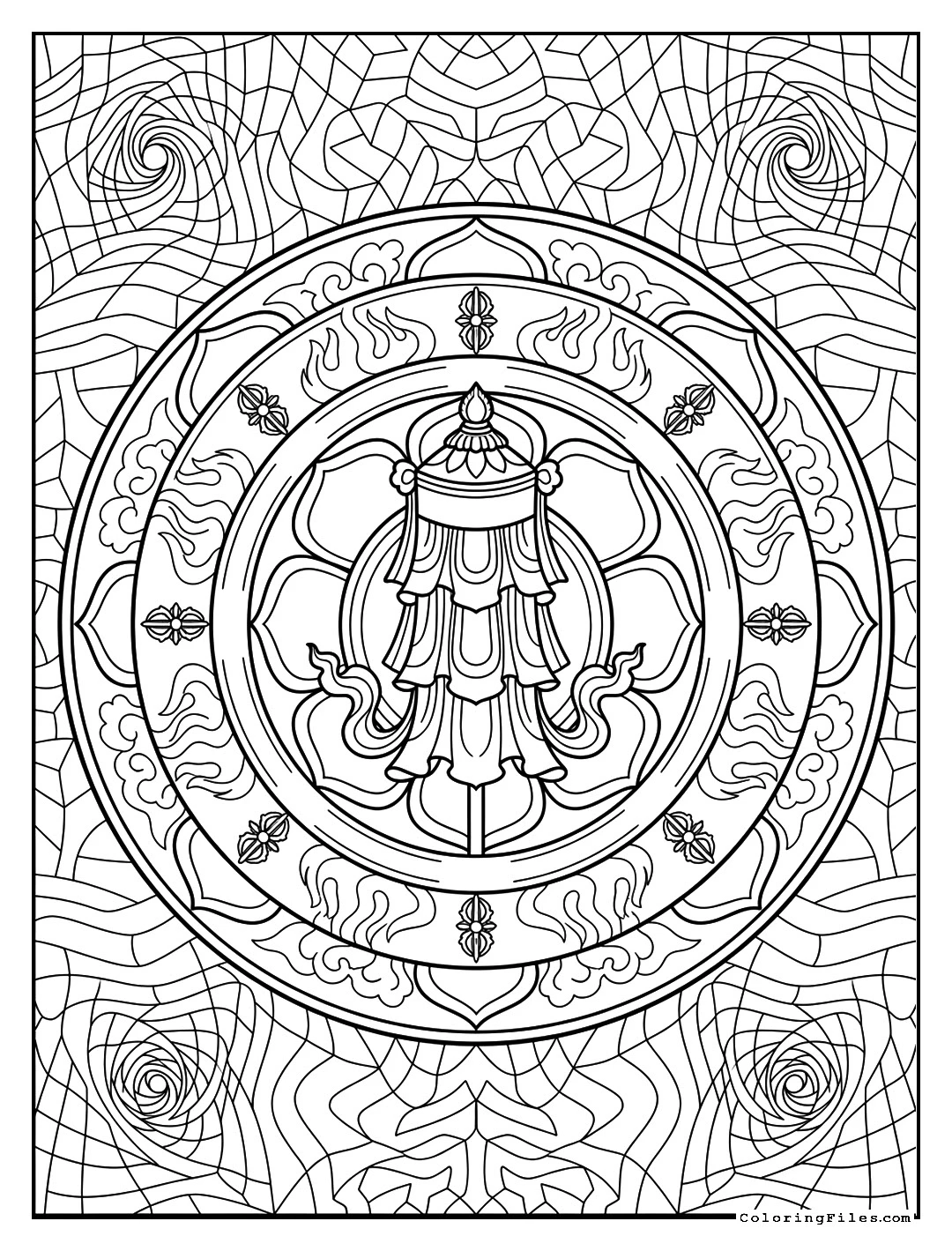
Victory Banner
Built around the symbol of the triumphant banner. It celebrates the victory of spiritual wisdom over ignorance, fear, and negativity.
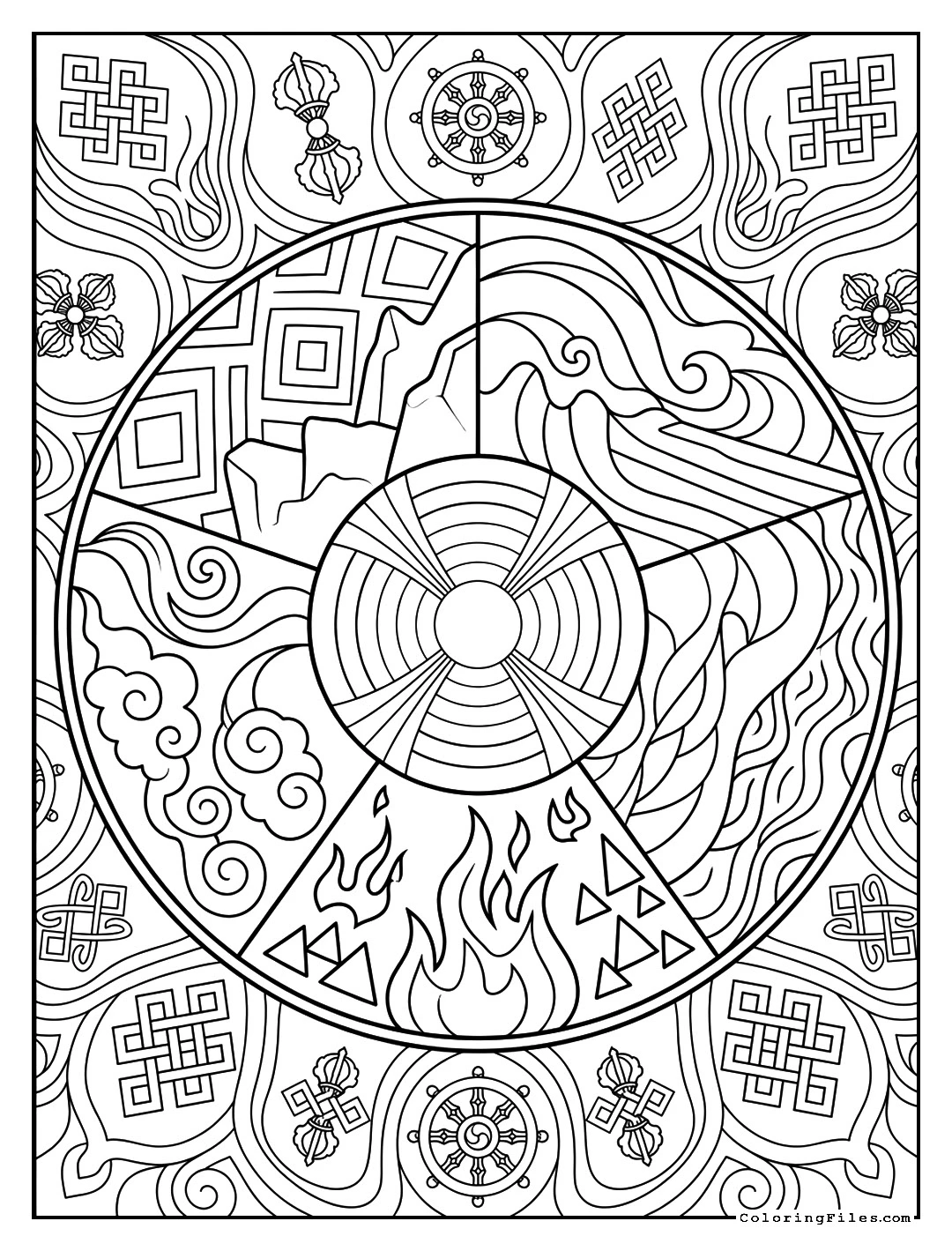
Five Elements
Segments dedicated to earth, water, fire, air, and space. It symbolizes the balance of natural forces within the body and the cosmos.
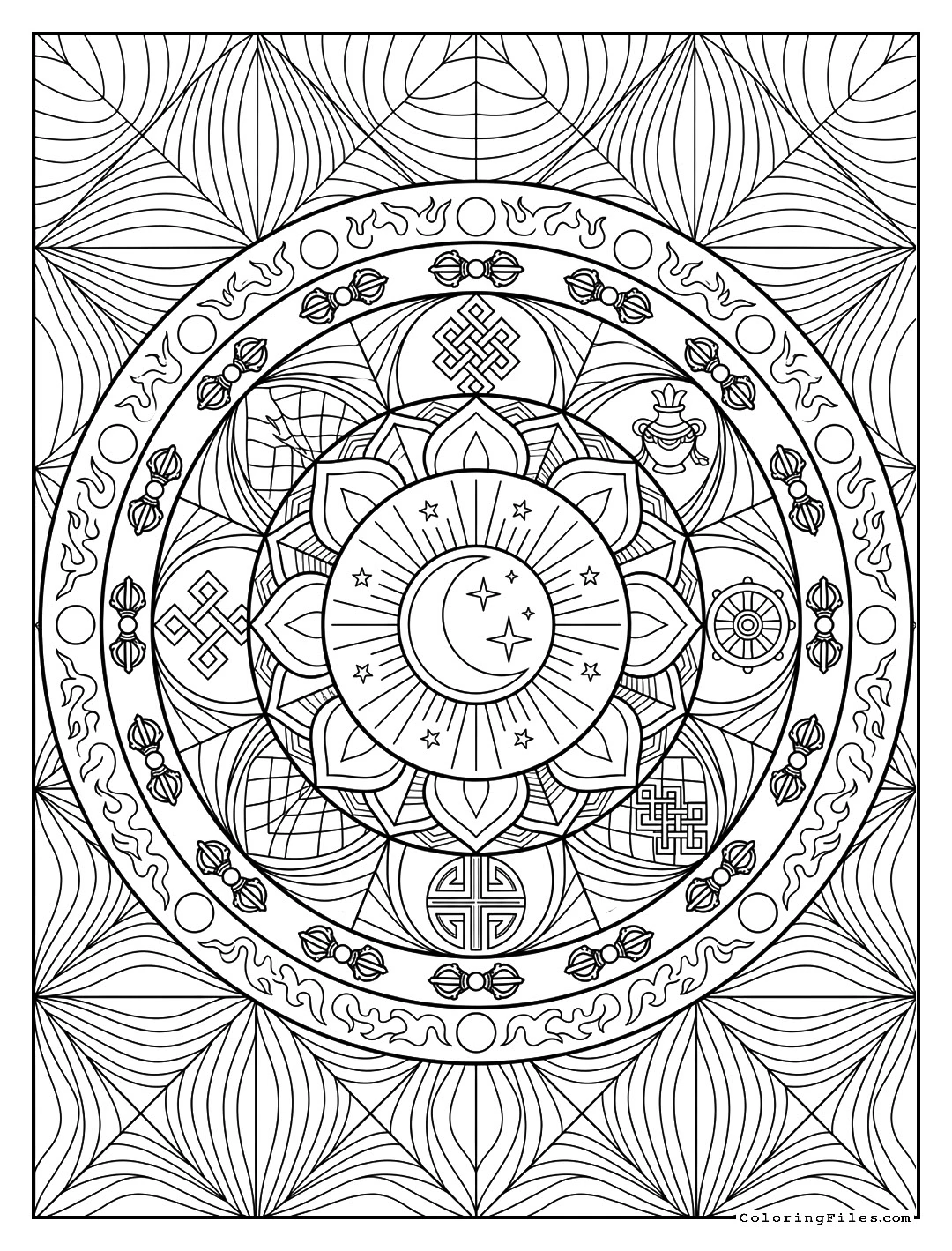
Moon Disc Tranquility
A soft, cooling circular design. It symbolizes the calming of negative emotions and the gentle, soothing nature of absolute compassion.
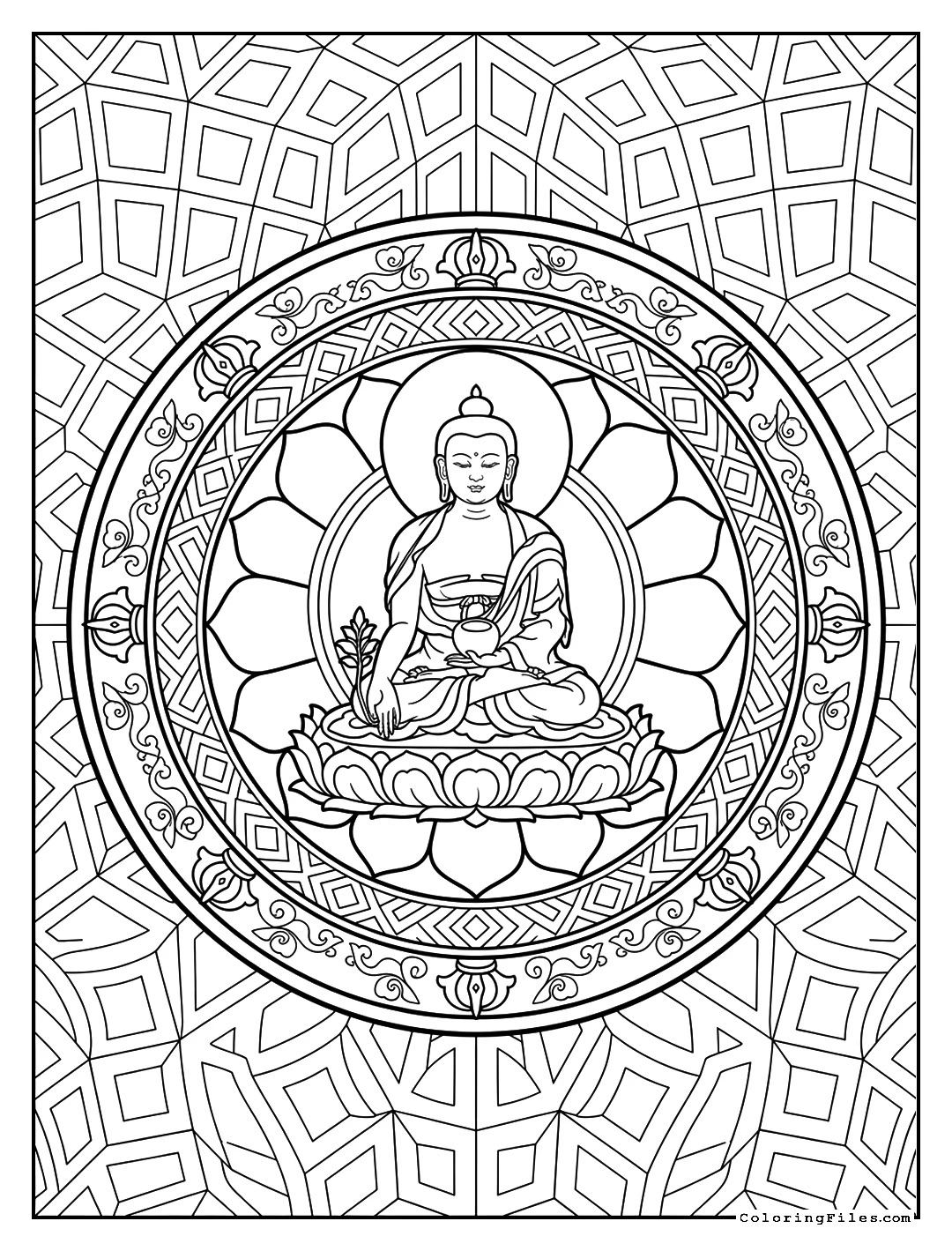
Medicine Buddha
A healing geometry dedicated to wellness. It symbolizes the eradication of physical illnesses and the spiritual toxins of greed and anger.
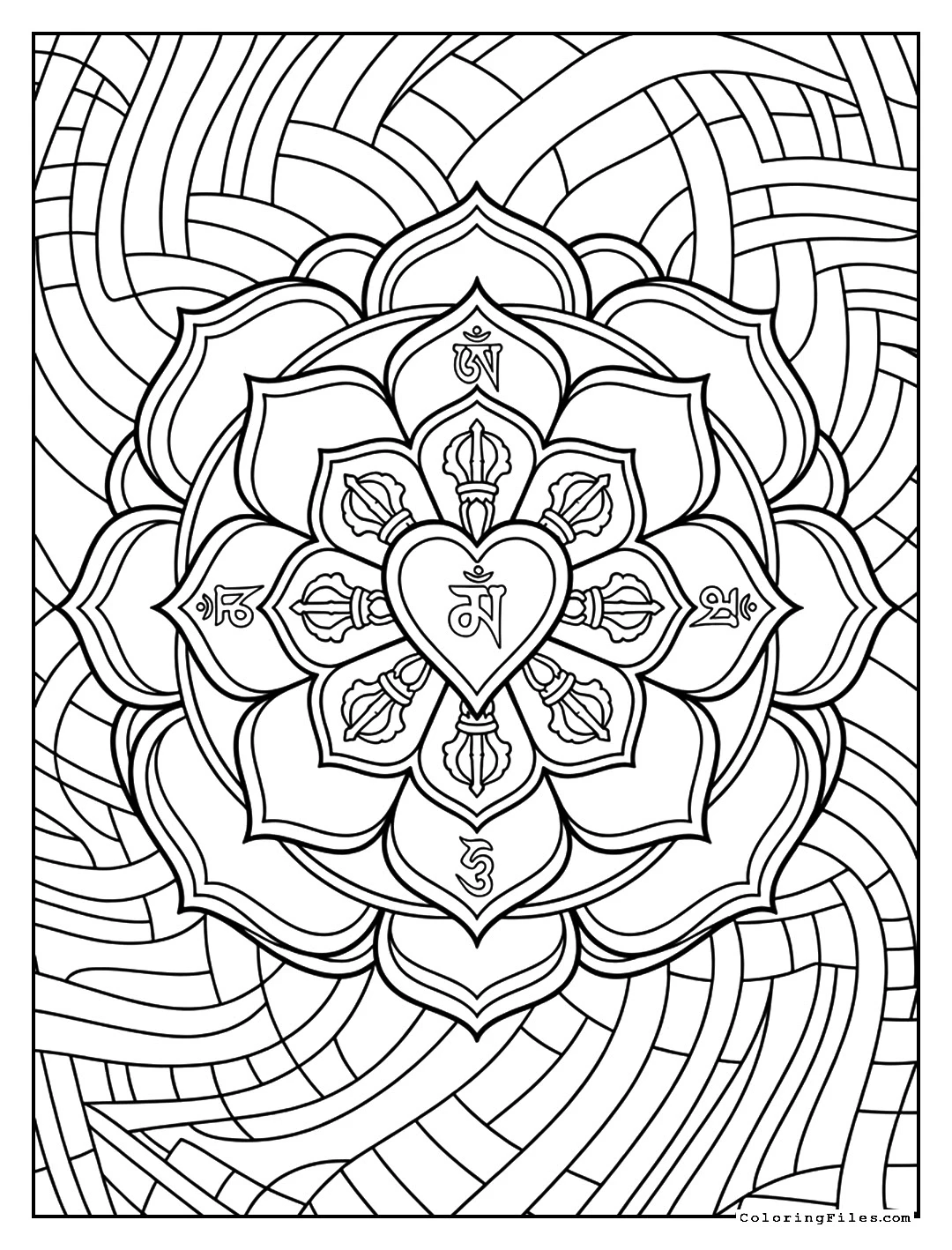
Heart Chakra Awakening
Radiates outward from the chest center motif. It symbolizes the opening of the self to unconditional love, empathy, and deep forgiveness.
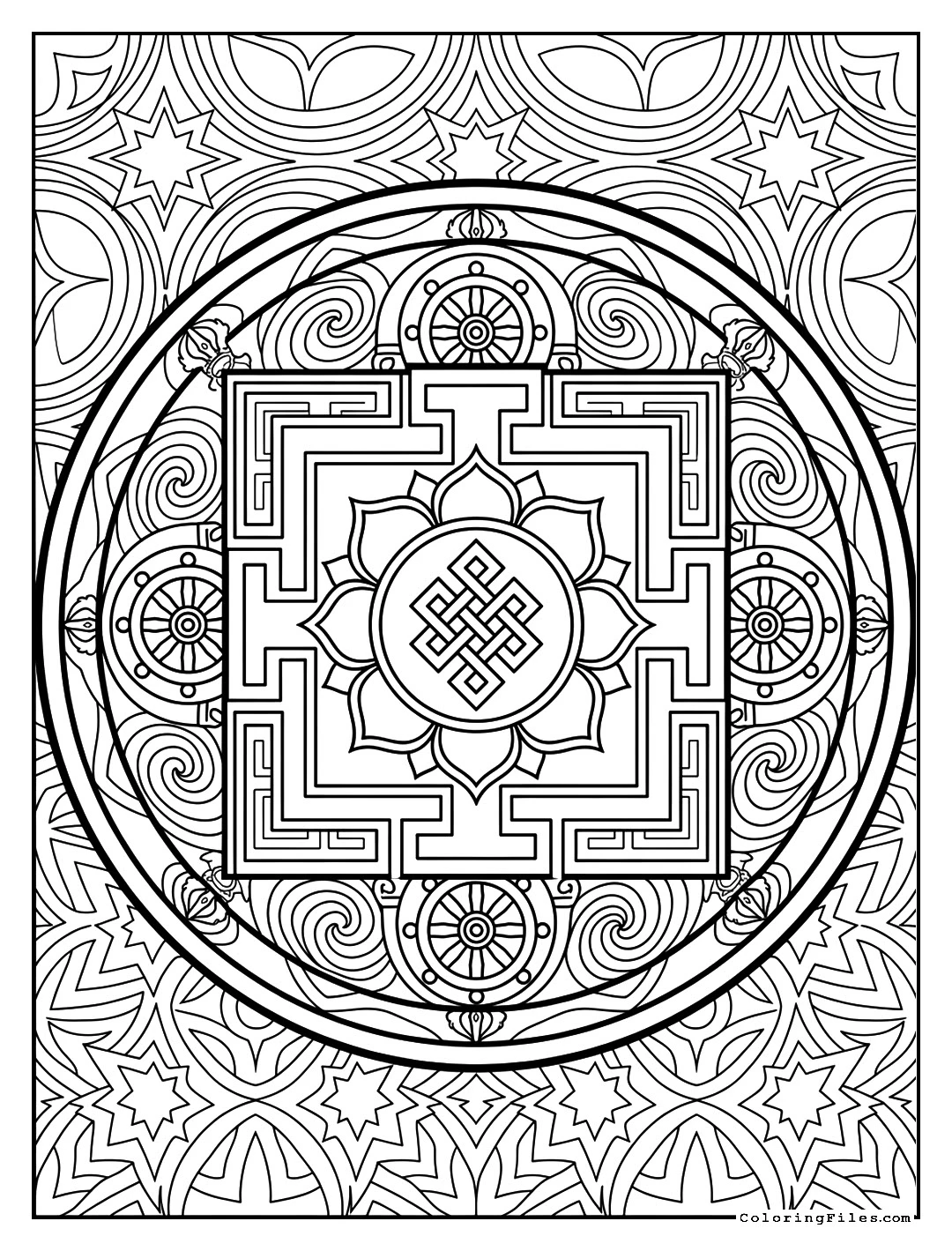
Cosmic Web of Karma
A hyper-detailed network of intersecting lines. It illustrates how every single action, thought, and being is profoundly woven together.
A Tibetan mandala is a sacred geometric configuration that serves as a visual representation of the universe and a map to spiritual enlightenment in Tibetan Buddhism. Traditionally structured with concentric circles enclosing a square palace with four grand gates, these intricate artworks symbolize the outer cosmos, the inner mind, and the pure realm of enlightened deities. Rather than being merely decorative, mandalas are active spiritual tools used by monks and practitioners for meditation, rituals, and internal transformation. By visualizing the mandala and moving mentally from its outer protective borders toward its absolute center, the meditator symbolically leaves the chaotic, suffering world behind to awaken their own innate wisdom, compassion, and inner peace.
The creation of a Tibetan mandala is a highly disciplined, meditative ritual that requires immense patience, precision, and adherence to sacred artistic texts. While some are painted on cloth scrolls called thangkas, the most famous variants are meticulously constructed using millions of grains of dyed sand. Working in pairs or groups, Buddhist monks begin by drawing a complex, mathematically precise geometric grid onto a flat surface using chalk and string. They then use small metal tubes called chak-purs to gently vibrate the colored sand onto the design, working from the center outward over the course of several days or even weeks. Once completed, the stunningly detailed sand mandala is ritually swept away and released into a nearby body of flowing water, a profound ceremony that symbolizes the core Buddhist philosophy of impermanence and the non-attachment to material things.

Our innovative platform lets you transform imagination into beautiful line art instantly. Design unique pages by blending intricate mandala patterns, stunning animals, and custom themes tailored to your style. Perfect for artists of all ages seeking relaxation, mindfulness, and endless creative fun.