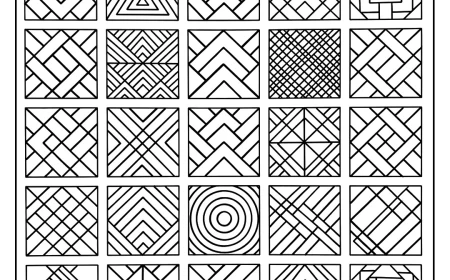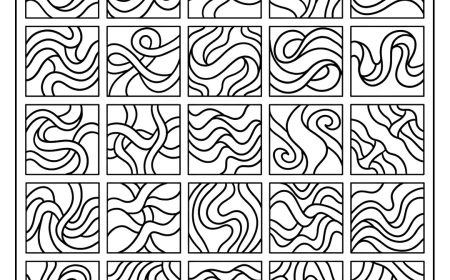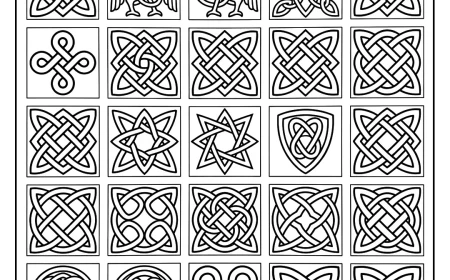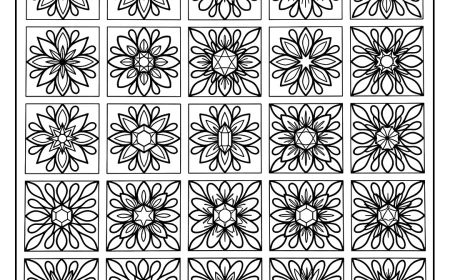
The Zentangle method is an easy-to-learn, relaxing, and fun way to create beautiful images by drawing structured patterns called tangles. By focusing on simple, repetitive strokes like lines, dots, and curves, anyone can enter a state of calm and heightened awareness, often referred to as "flow." This free printable PDF serves as an accessible entry point to this practice, allowing you to enjoy the psychological benefits of art therapy without needing prior artistic experience.
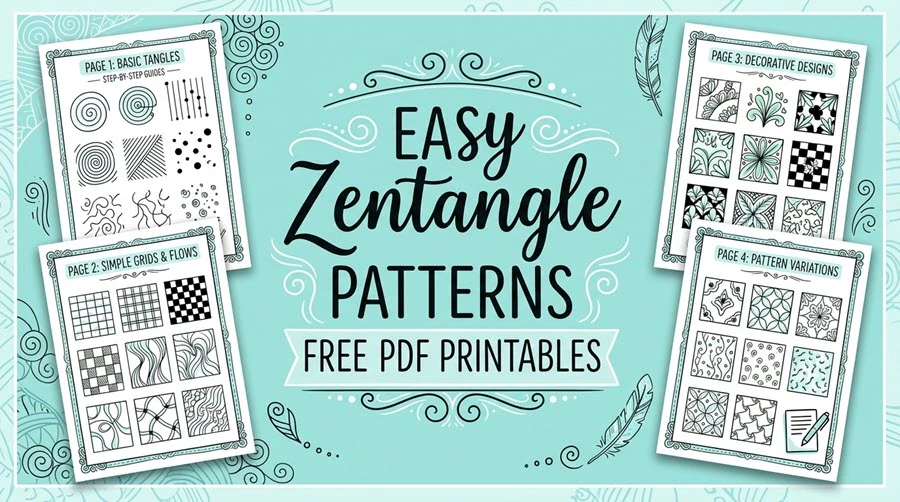
To make the most of these coloring pages, simply print the PDF on high-quality paper or cardstock that can handle your favorite mediums, such as fine-liner pens, gel pens, colored pencils, or light markers. As you color within the structured geometric layouts or use the blank frames to practice drawing your own tangles, remember that there are no mistakes in Zentangle art—every stroke is intentional. Use this guide as a daily mindfulness ritual, a warm-up exercise before tackling larger art projects, or a peaceful evening activity to help you unwind and clear your mind before sleep.
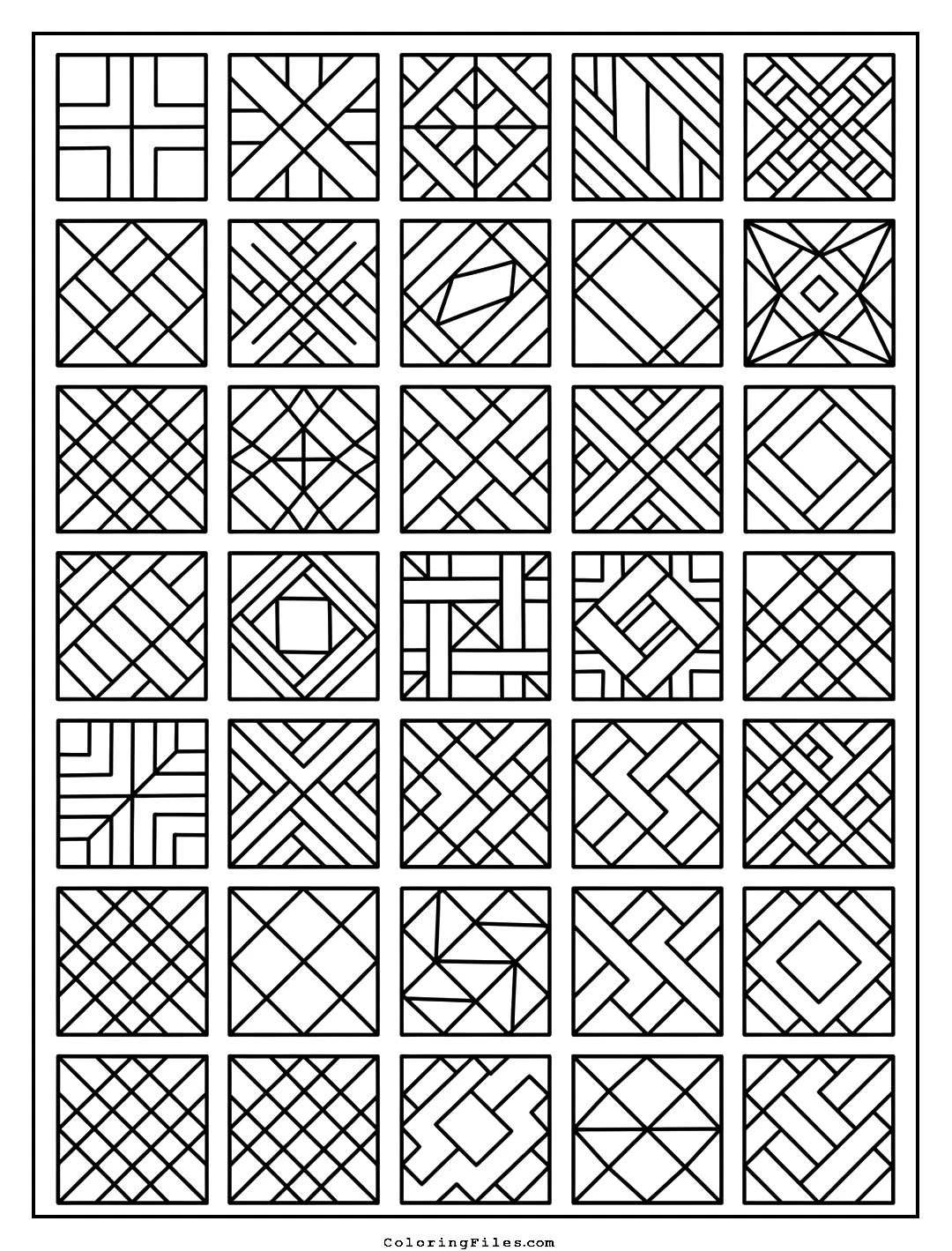
Dance of Lines
Dance of Lines weaves fluid, parallel waves that intertwine rhythmically. Dense hatch marks fill alternating tracks to mimic graceful, sweeping movement.
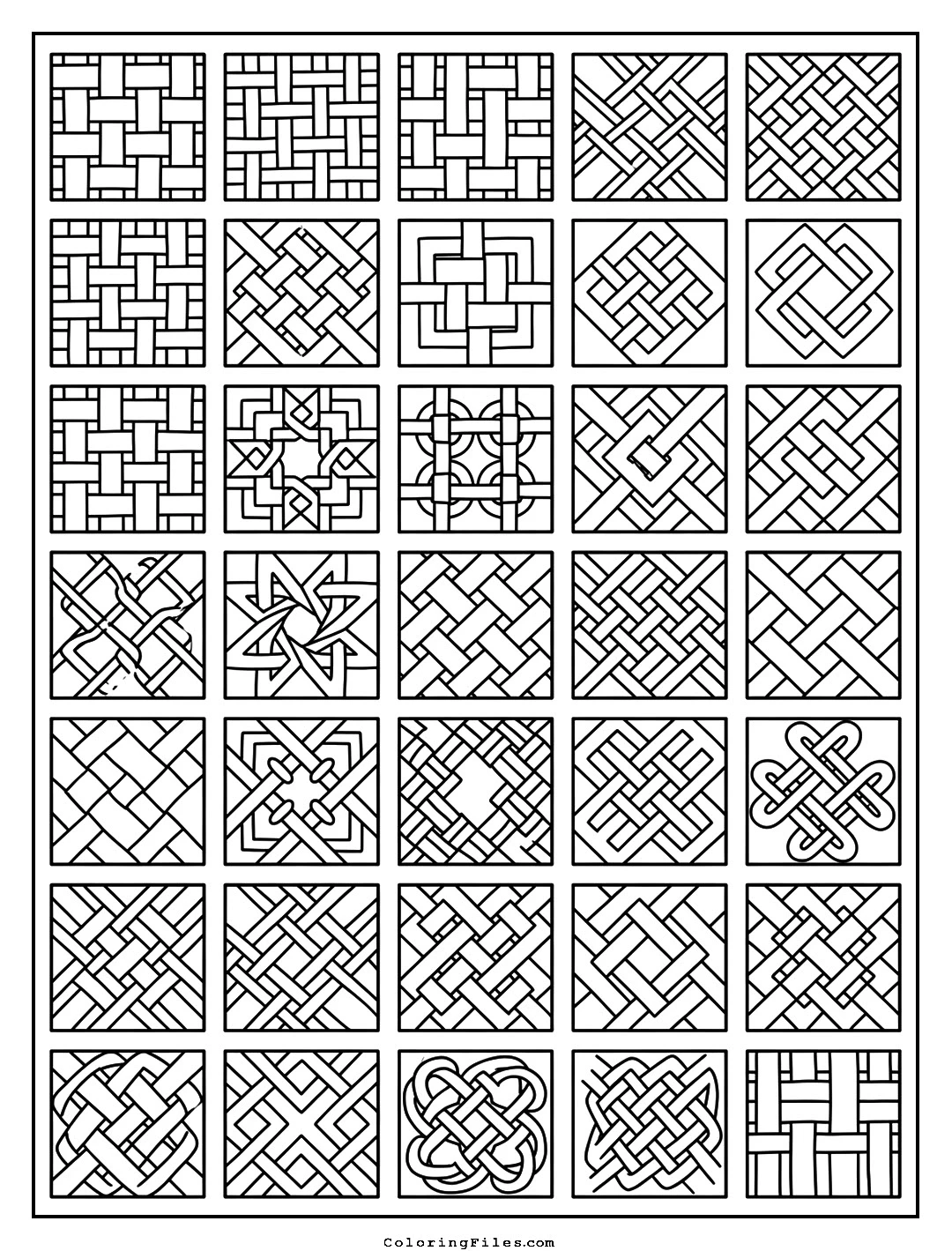
Woven Zentangle
Woven uses alternating vertical and horizontal blocks of straight lines to build a crisp, realistic basket-weave pattern.
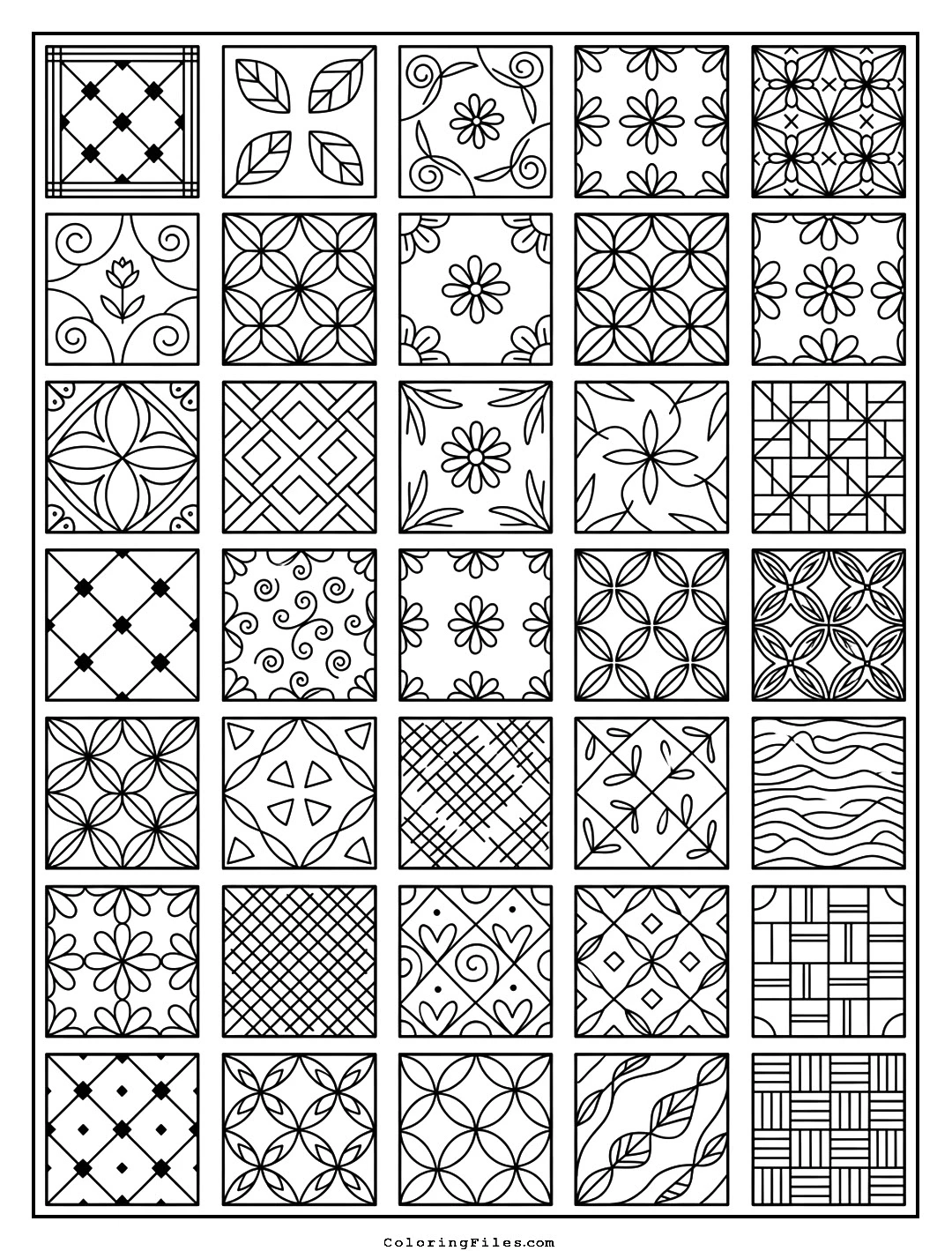
Florz Pattern
Square grid with ink diamonds at intersections. Inner edges are framed with a parallel border line for a tiled finish.
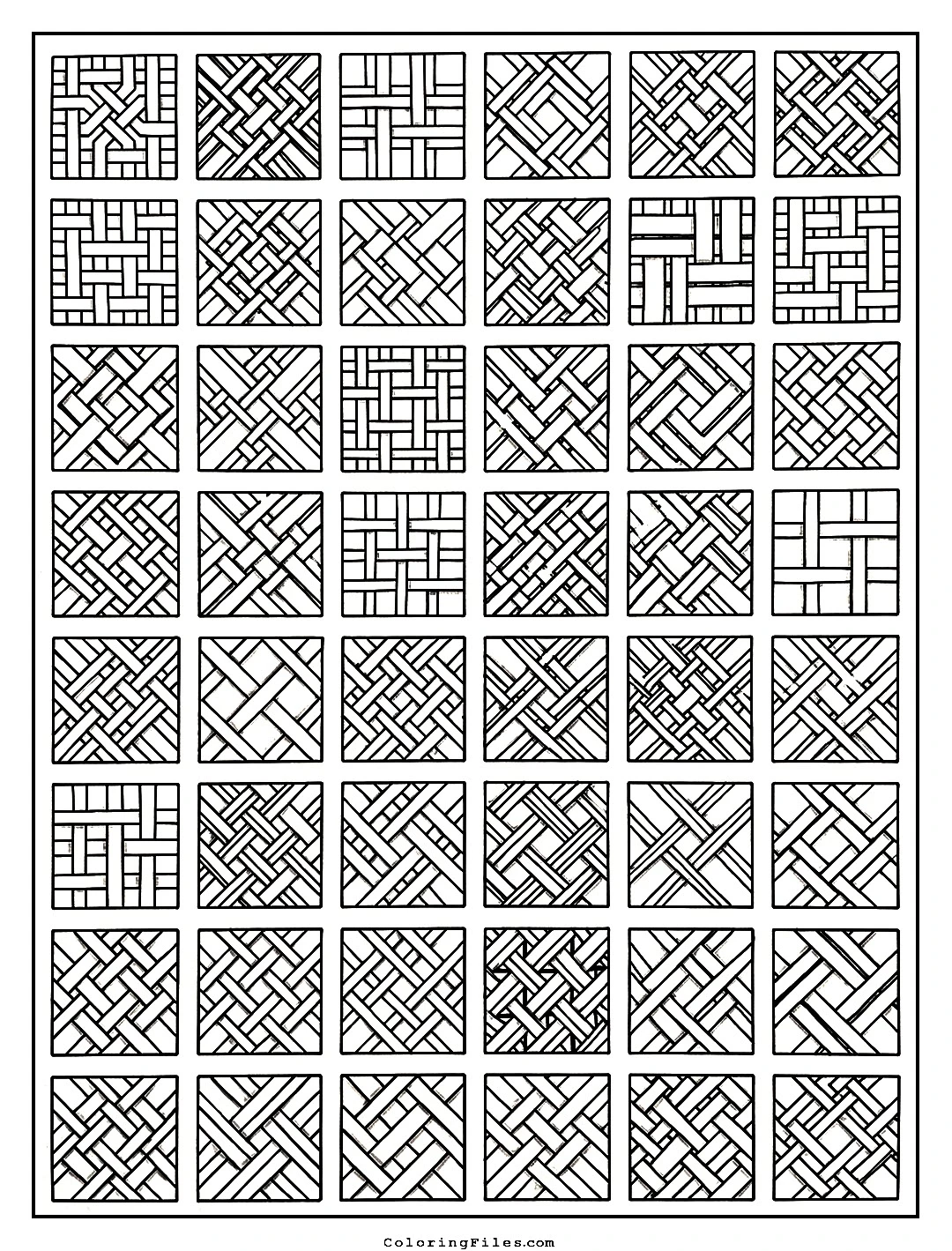
Hollibaugh Pattern
Overlapping straight bands. Draw bands that go under previous ones by lifting your pen, creating deep, intersecting geometric planes.
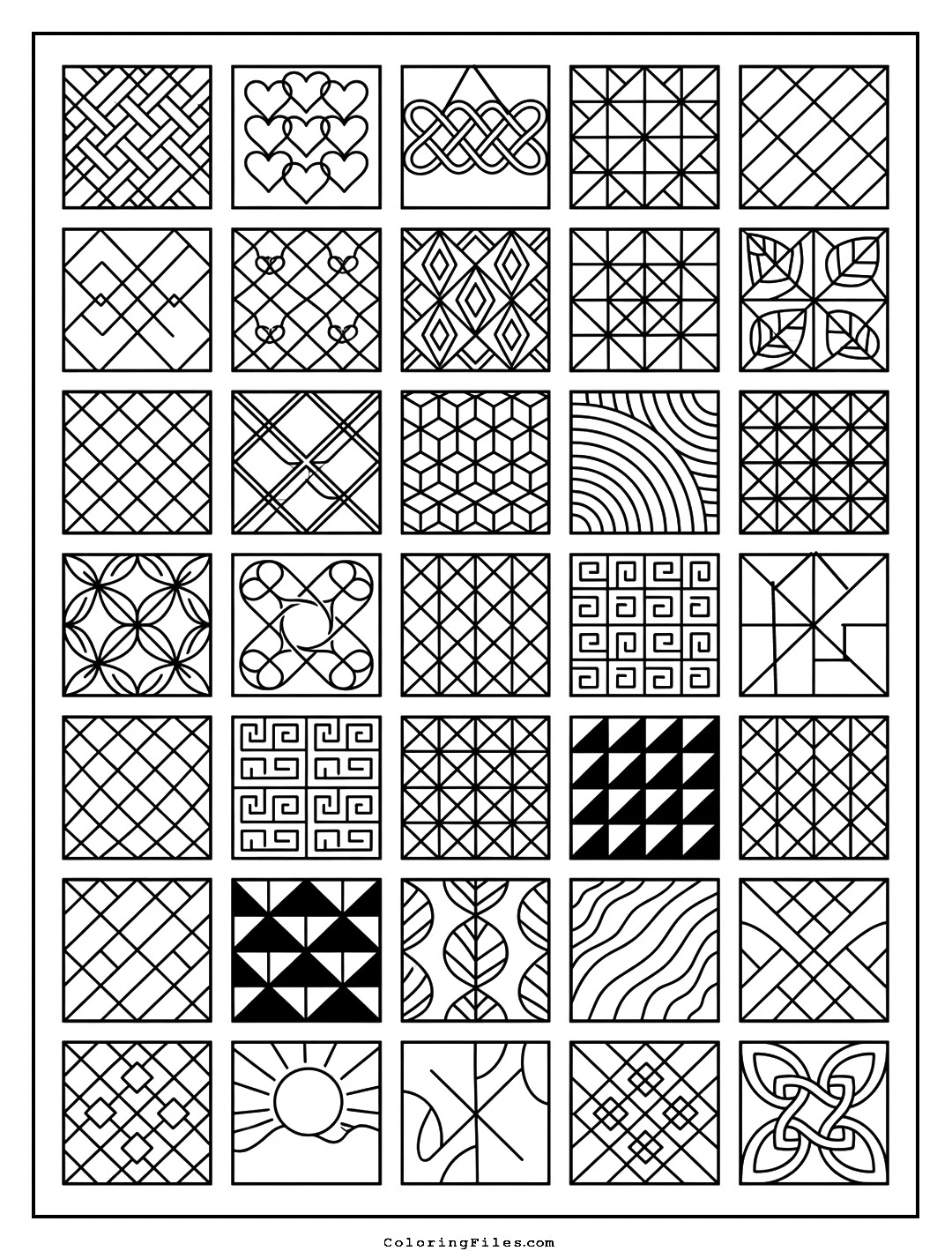
Dear Zentangle
Dear Love weaves interlocking heart shapes wrapped in concentric outline frames, creating a rich, romantic geometric lace.
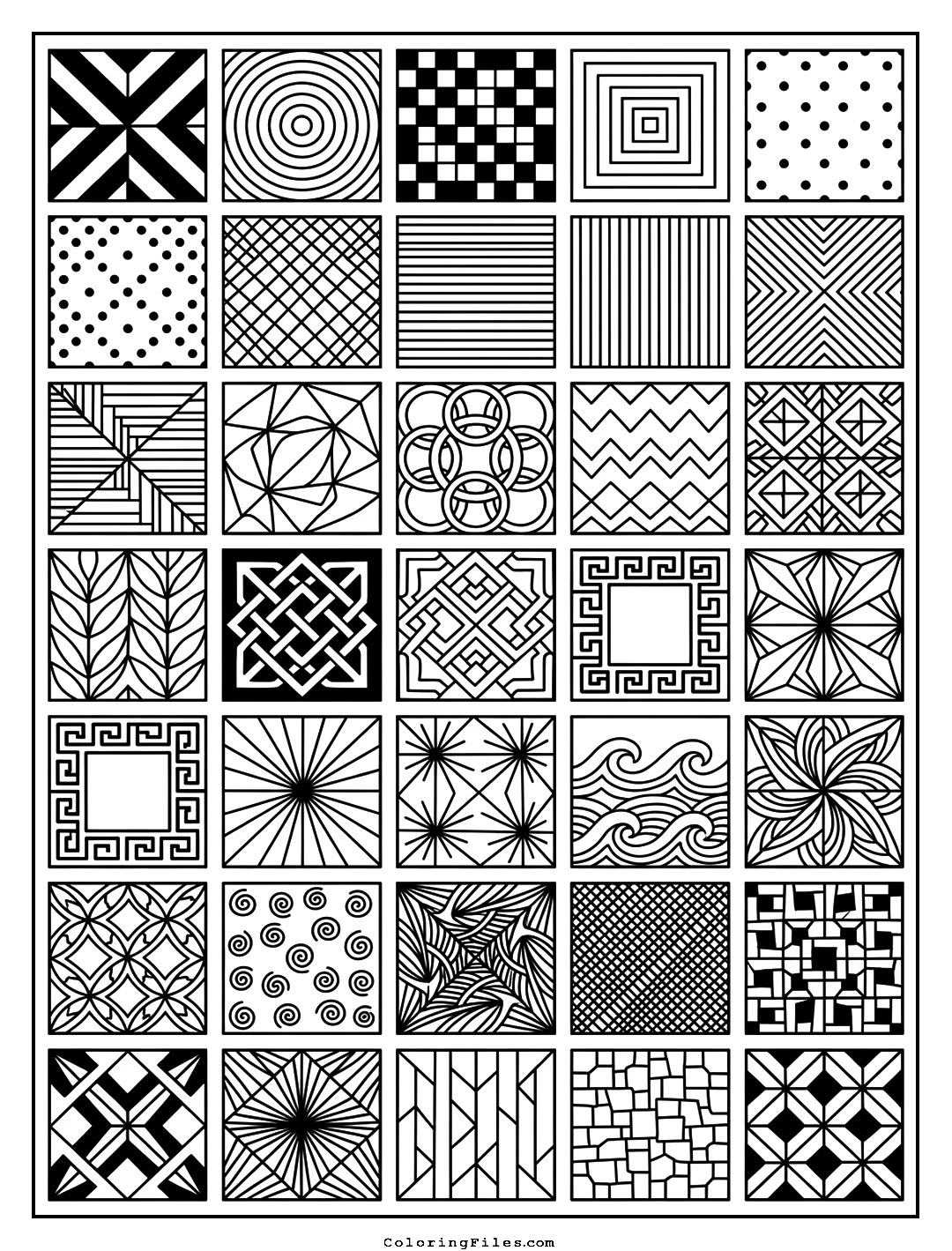
Knight's Cross Pattern
Draw an "X" corner to corner inside each square. Shade two opposing triangles to create a bold, alternating motif.
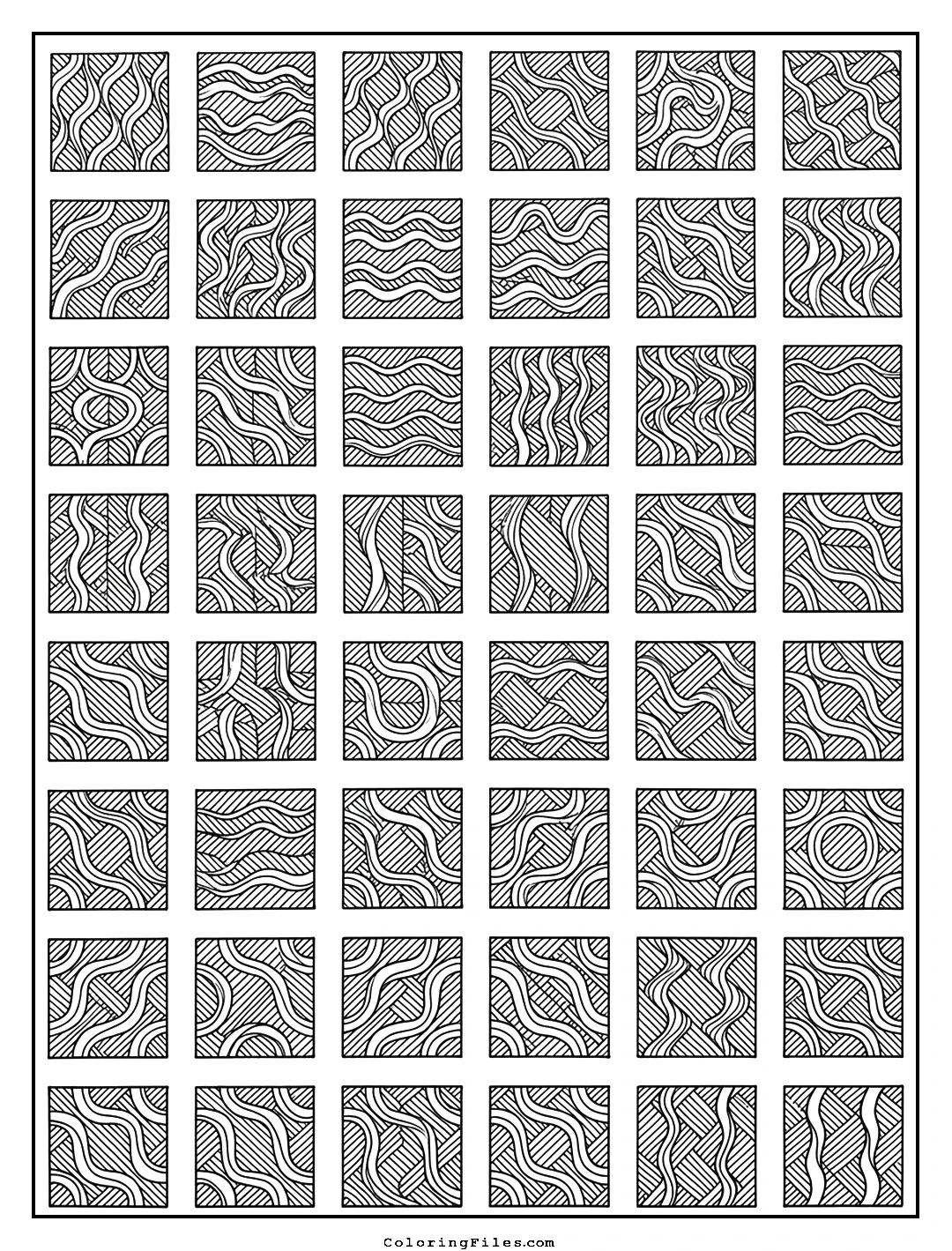
Shattuck Pattern
Parallel wavy ribbon paths. Fill the channels with tightly packed diagonal lines that cleanly change direction in every row.
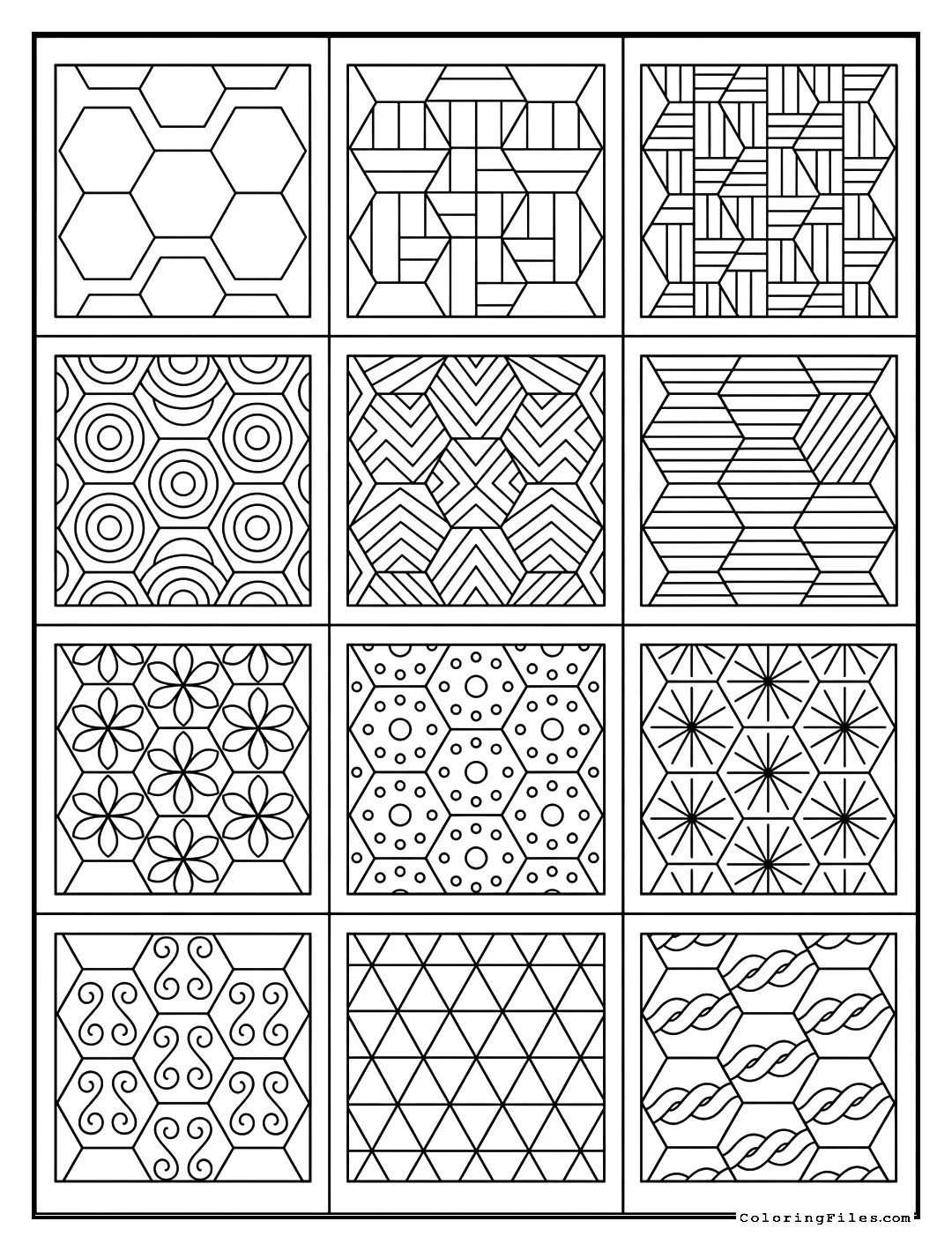
Geometric Hexagon Grid
Draw a repeating net of interlocking hexagons, filling alternate cells with fine parallel lines. Color the geometric shapes in contrasting shades of teal and mustard yellow.
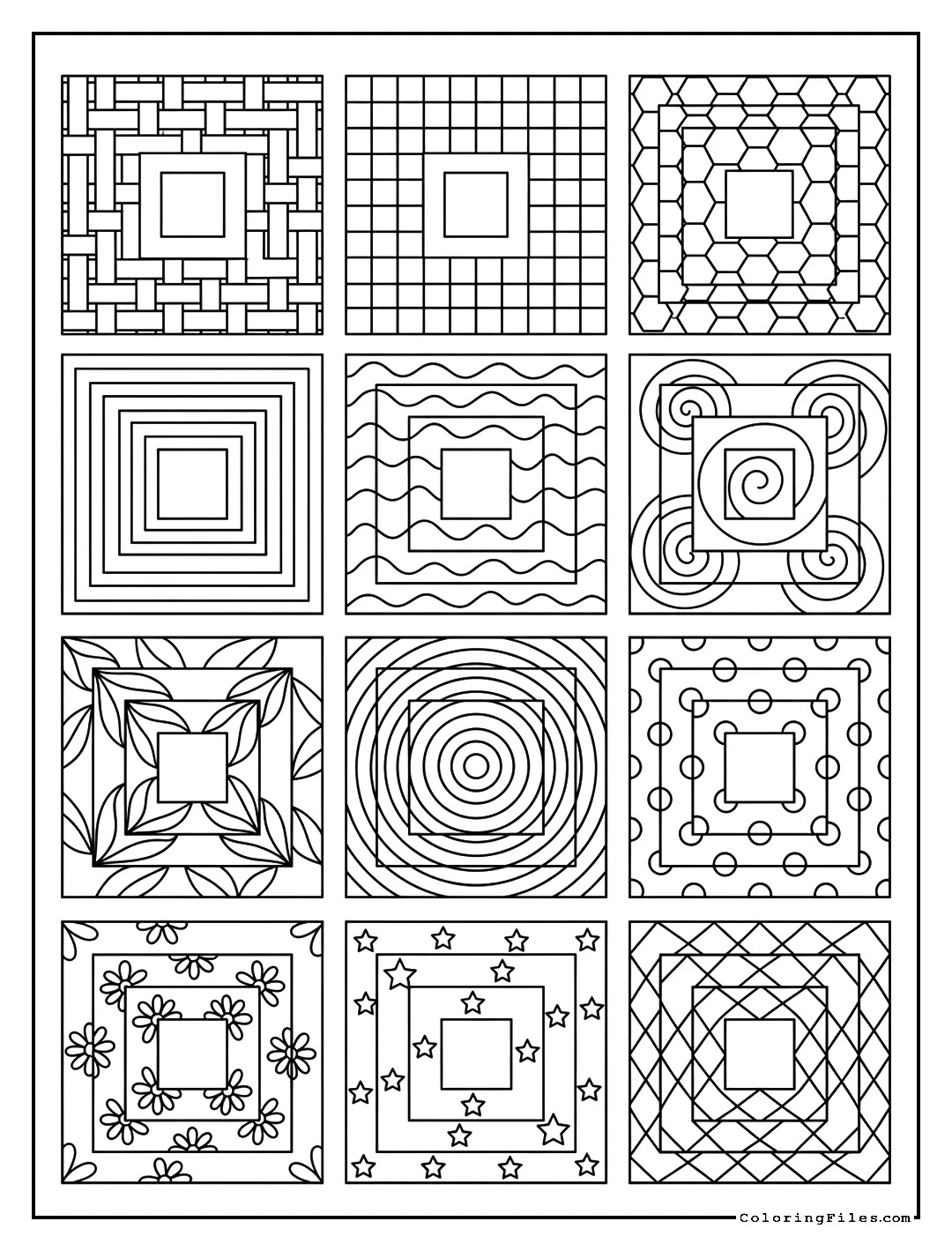
Concentric Square Wave
Draw nested squares expanding outward from a central point, rounding the corners for a wave effect. Color each ring in a gradient of warm sunset orange tones.
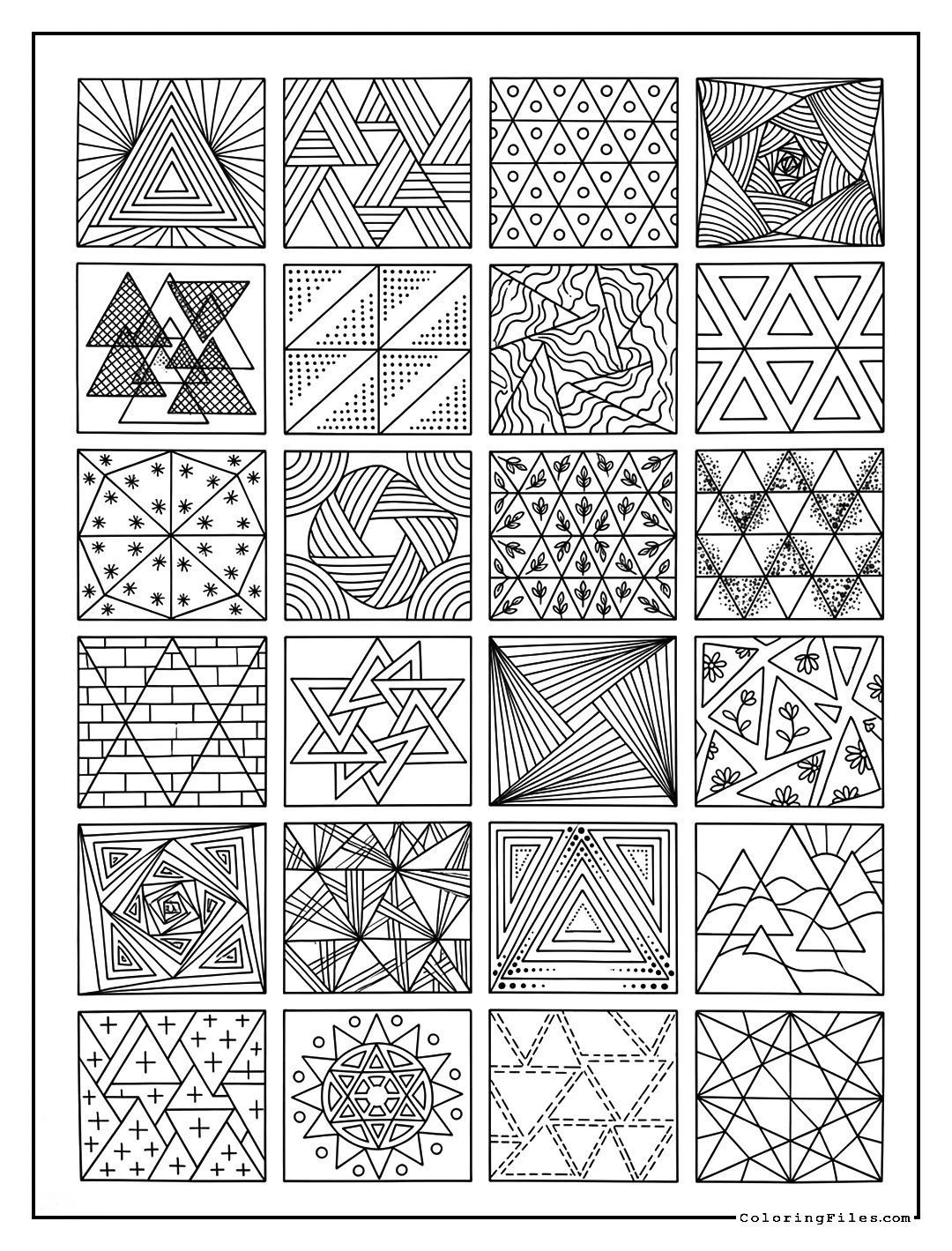
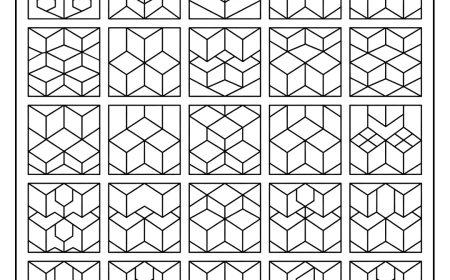
Cubical Illusion Zentangle
Interlocking 3D cubes represent the structured layers of the mind, showing how logic and creativity connect.
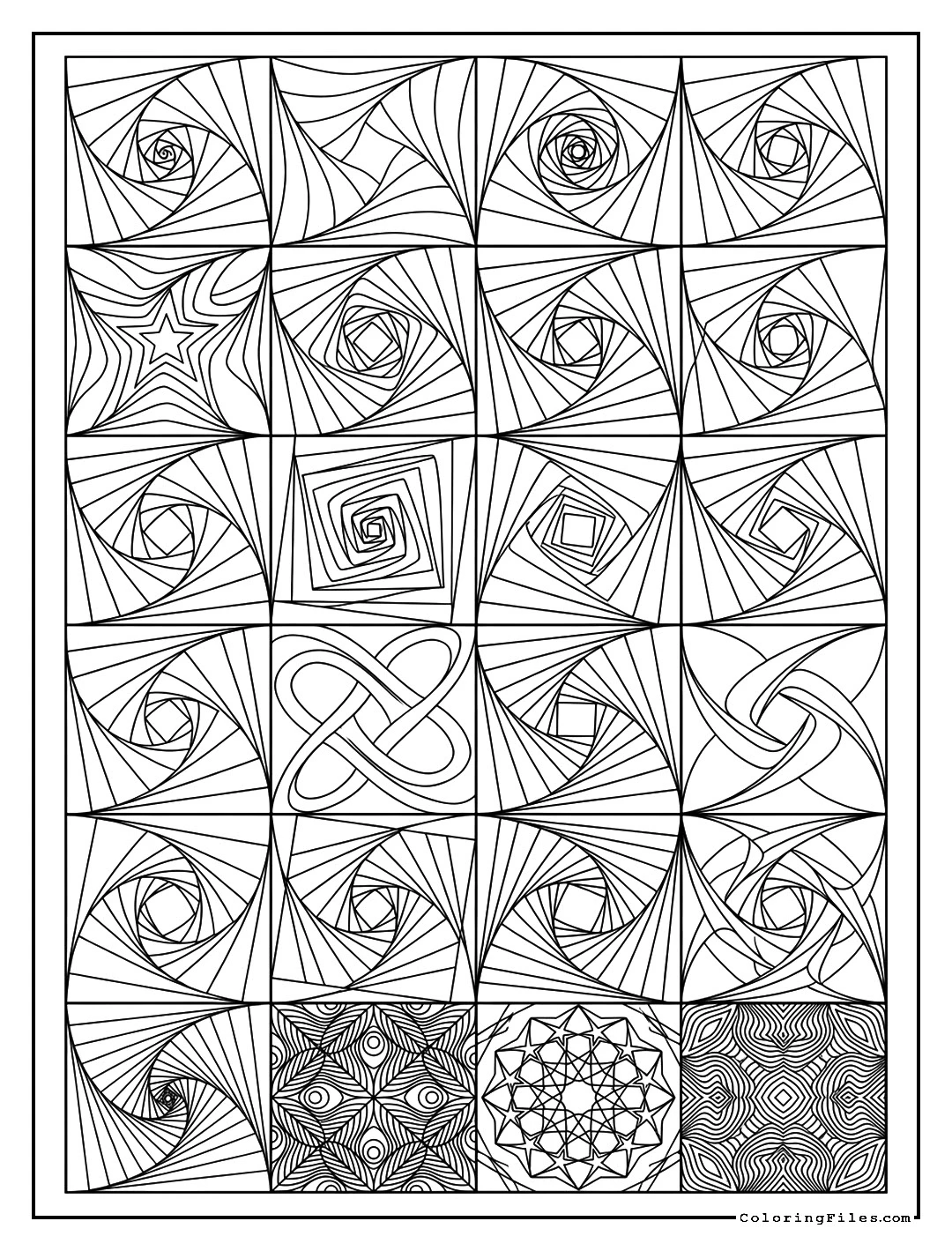
Paradoxical Ribbon Tangle
Shifting geometric lines wrap around each other, showing that paths that seem broken are still whole.
Labyrinth of Logic Zentangle
A structured maze pattern that helps calm a racing brain by organizing chaotic thoughts into lines.
Tipple Zentangle
Clusters of different-sized perfect circles. Pack them tightly and ink the tiny negative triangular spaces black for contrast.
Crescent Moon
Fill the crescent shape with solid black, leaving a bright white crescent sliver along the inner curve for a glowing, dimensional effect.
Fibonacci Spiral Grid
Built on nature’s golden ratio, it connects your art to the organic mathematical blueprint of life.
Purk
Color alternate checkerboard or grid squares with a rich black ink pen, and add a light graphite halo around the outer edges for contrast.
Florz
Add a dark graphite shadow in the corners of each square grid section, letting the center fade to white for a pillowed, quilted look.
Hollibaugh
Shade underneath the overlapping ribbons using a dark pencil to cast realistic shadows, making the tangled strips appear to weave over and under.
Paradox
Use alternating fine-liner cross-hatching or gradient colored pencils in the triangular segments to create a striking, hypnotic optical illusion.
Pepper
Fill the small circles completely with solid black ink and use a white gel pen to add a tiny, offset highlight dot for a shiny, glossy sphere.
Veronique
Shade the base of each petal cluster with dark graphite, blending gently upward so the tips appear illuminated by a soft overhead light source.
Taria
Add a bold black fill to every alternate triangle section, then use soft colored pencils to tint the remaining open spaces with pastel hues.
Kahomaru
Color alternating concentric squares with a fine-tipped colored marker, creating a vibrant, woven geometric basket pattern effect.
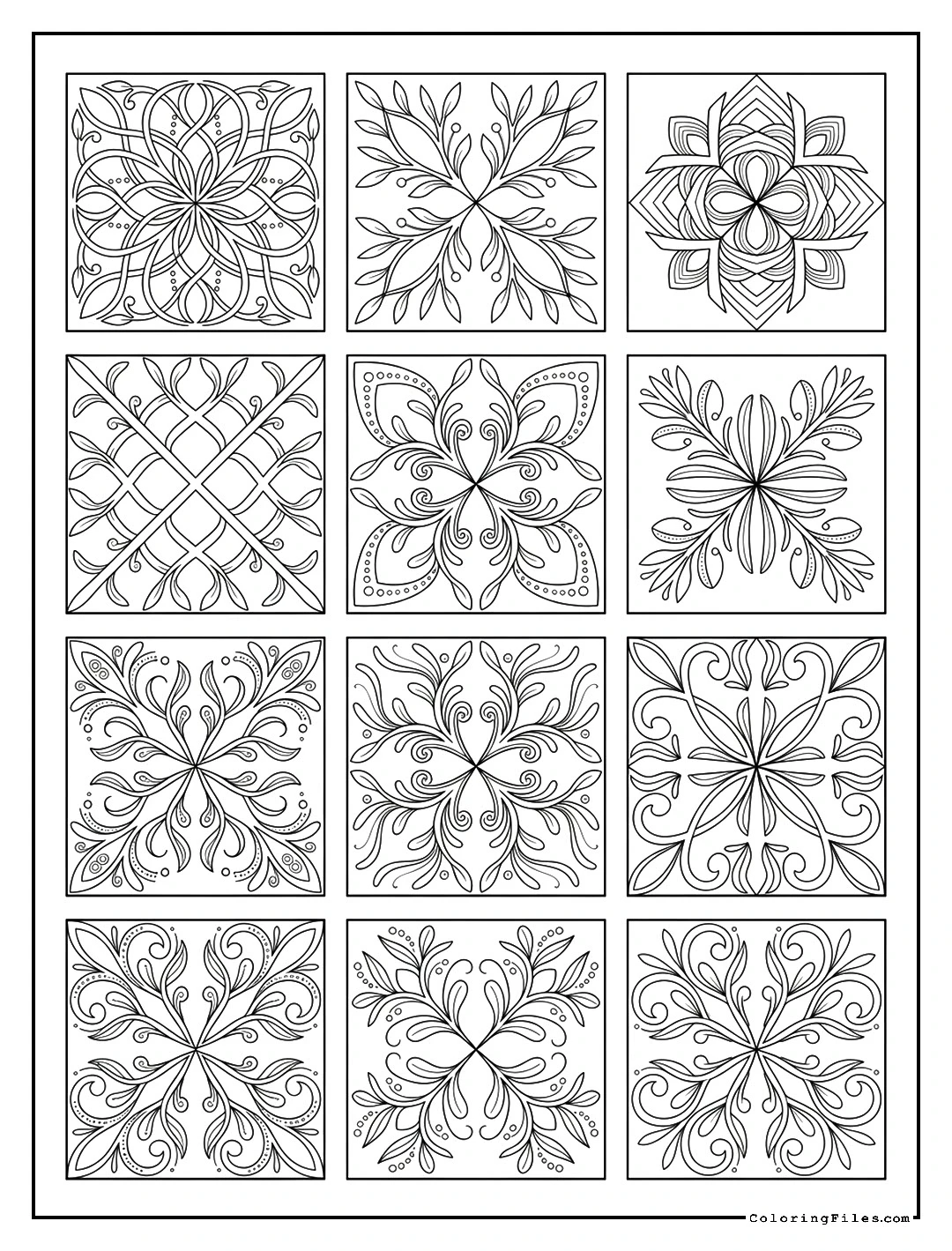
Mooka
Shade the central spine of each sweeping vine with dense graphite and feather it outward toward the wavy edges for a soft, organic curve.
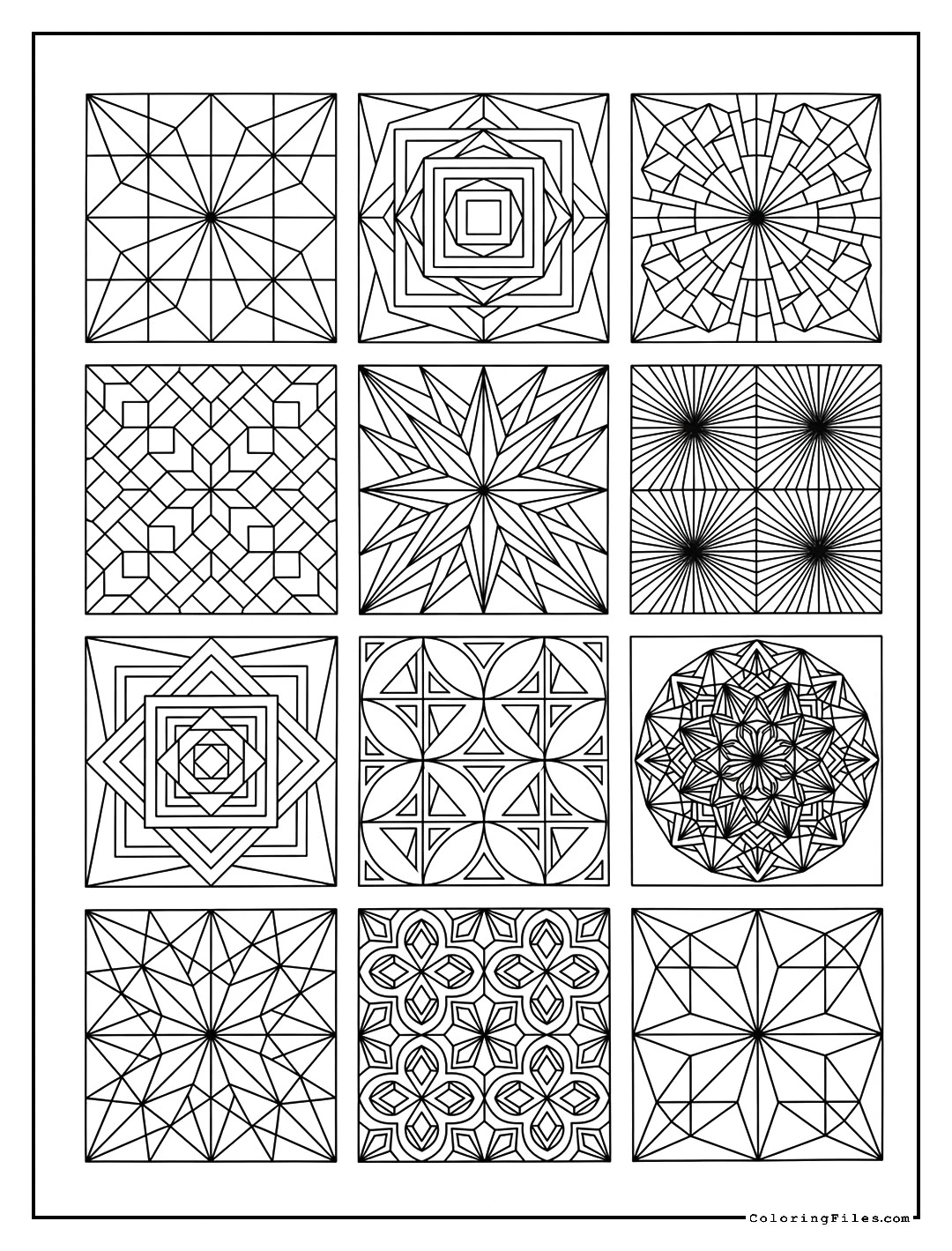
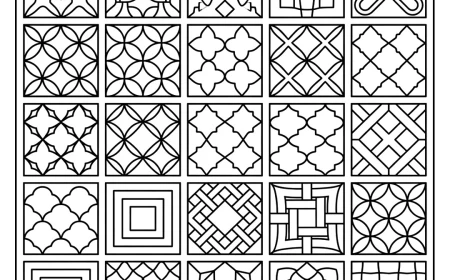
Knightsbridge
Fill every other square in the grid with solid black ink, leaving a crisp white checkerboard pattern that pops with high visual contrast.
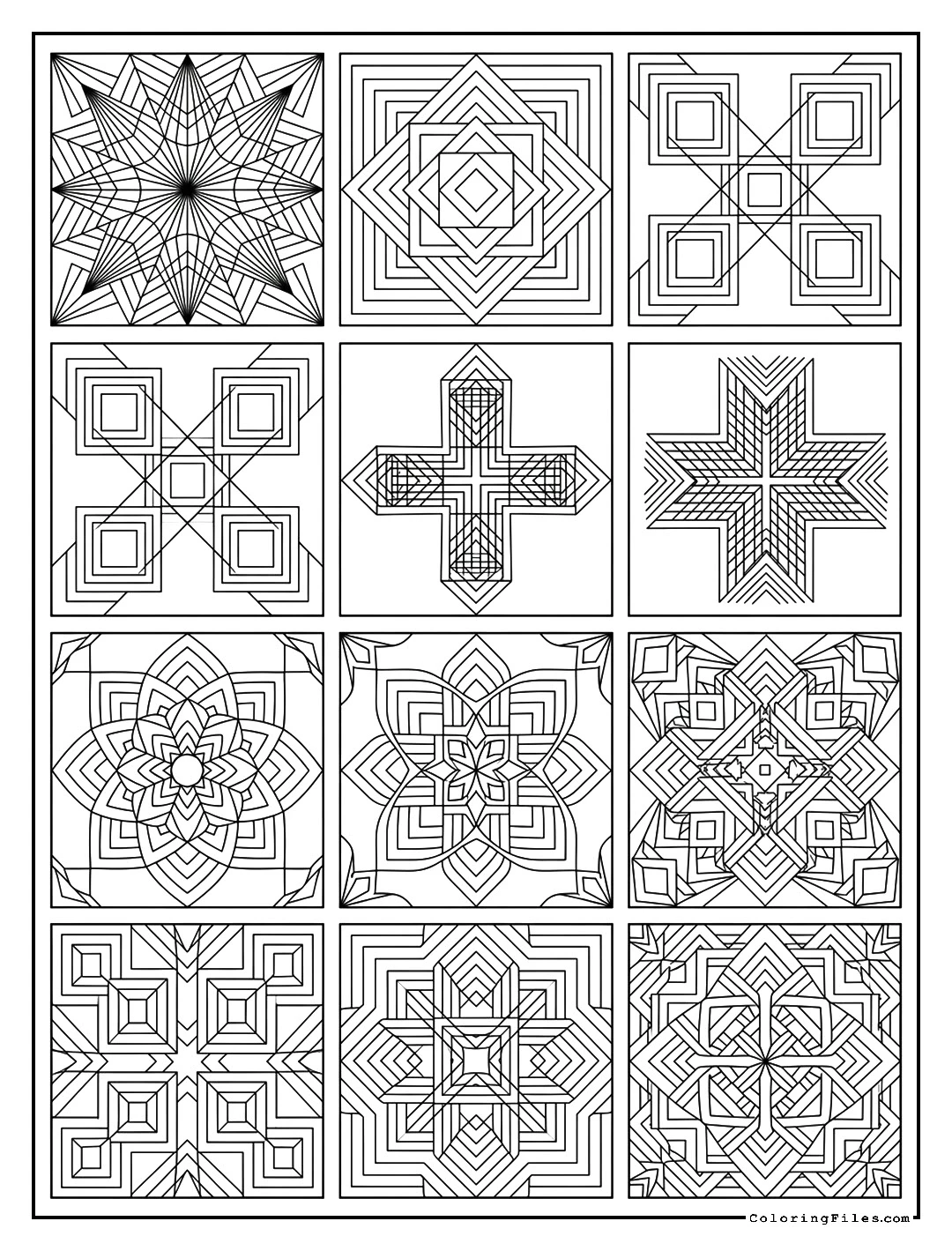
Bales
Shade the pinched centers of the curved grid shapes with dark graphite, letting the puffed outer corners stay bright and clean
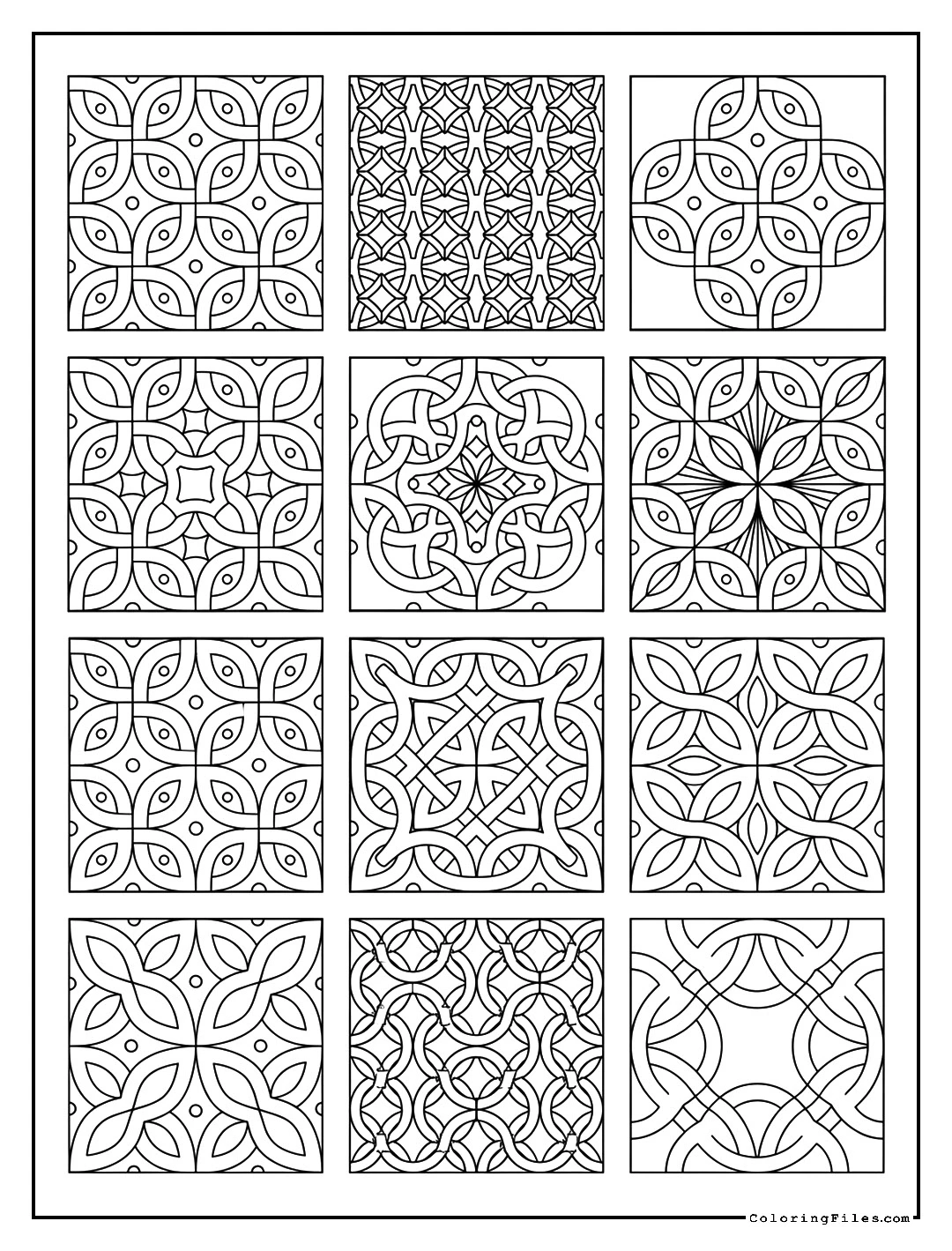
Cadent
Color the connected circular nodes with vibrant watercolor washes, and outline the connecting stems with a sharp, contrasting metallic pen.
Diva
Shade the deep folds where the ruffled petals overlap using heavy graphite, blending inward to create a lush, blossoming flower effect.
Static
Fill every alternate zig-zag stripe with solid black ink to produce a sharp, electrifying geometric lightning bolt visual
Heartfelt
Color the interior of the interlocking heart shapes with soft pink and red colored pencils, adding a white gel pen highlight for gloss.
Scallop
Shade beneath each overlapping curved wave with a dark pencil to give the layered scales a realistic, stacked dimensional depth.
Rick's Paradox
Use gradient colored pencils to shade from dark to light across the continuous triangular ribbon loops, enhancing the endless tunnel effect.
Braze
Fill the alternating diamond spaces with rich metallic gold or bronze ink to give this structured geometric pattern a luxurious sheen.
Cubine
Shade three alternating sides of each isometric cube with varying tones of grey graphite to create a convincing three-dimensional box look.
Nzeppel
Color the central overlapping curved shapes with a solid dark marker, and add soft grey shading around the intersections for added depth.
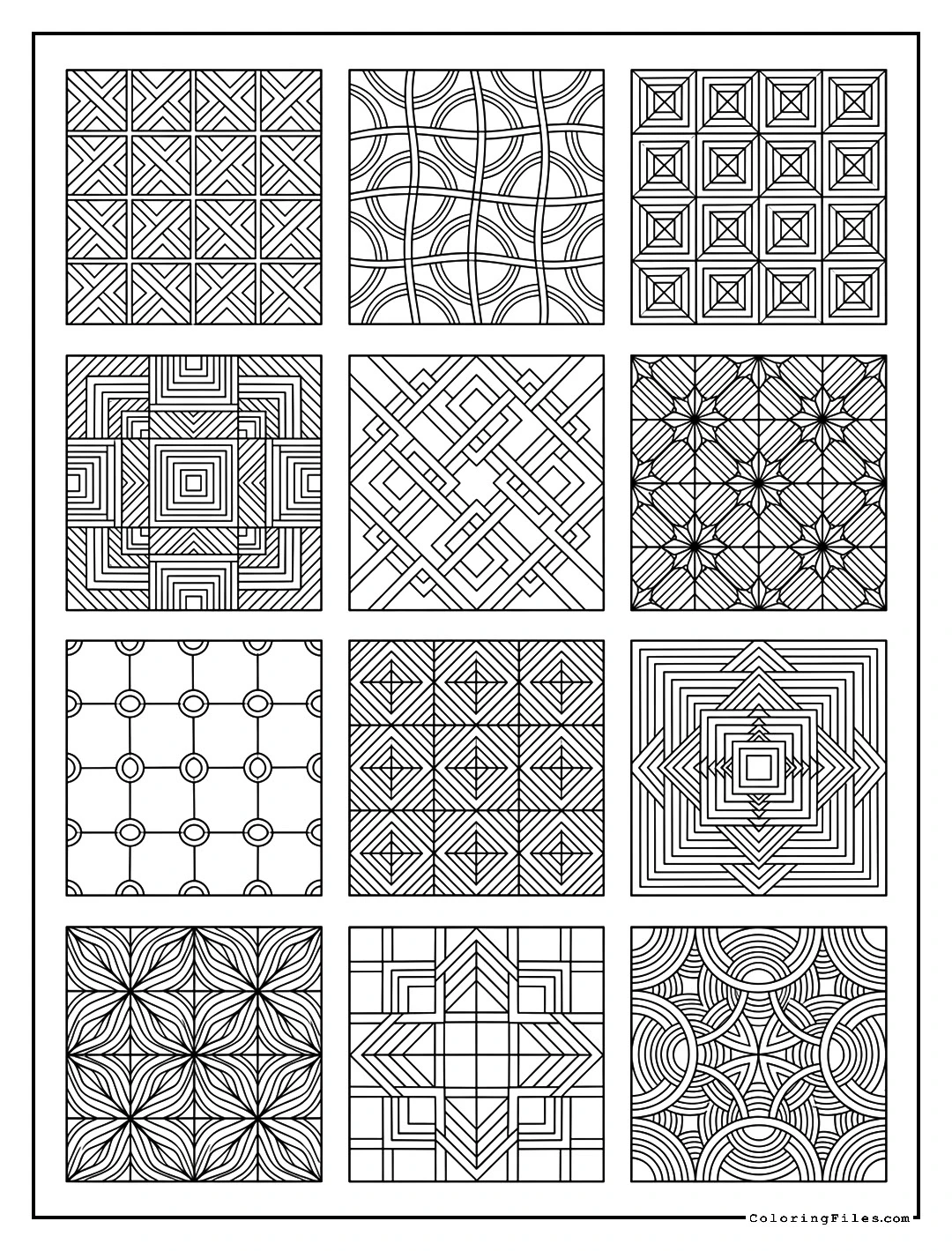
Shatuck
Fill the triangular wedge spaces with alternating dark and light ink strokes, creating a dynamic, exploding sunburst visual rhythm.
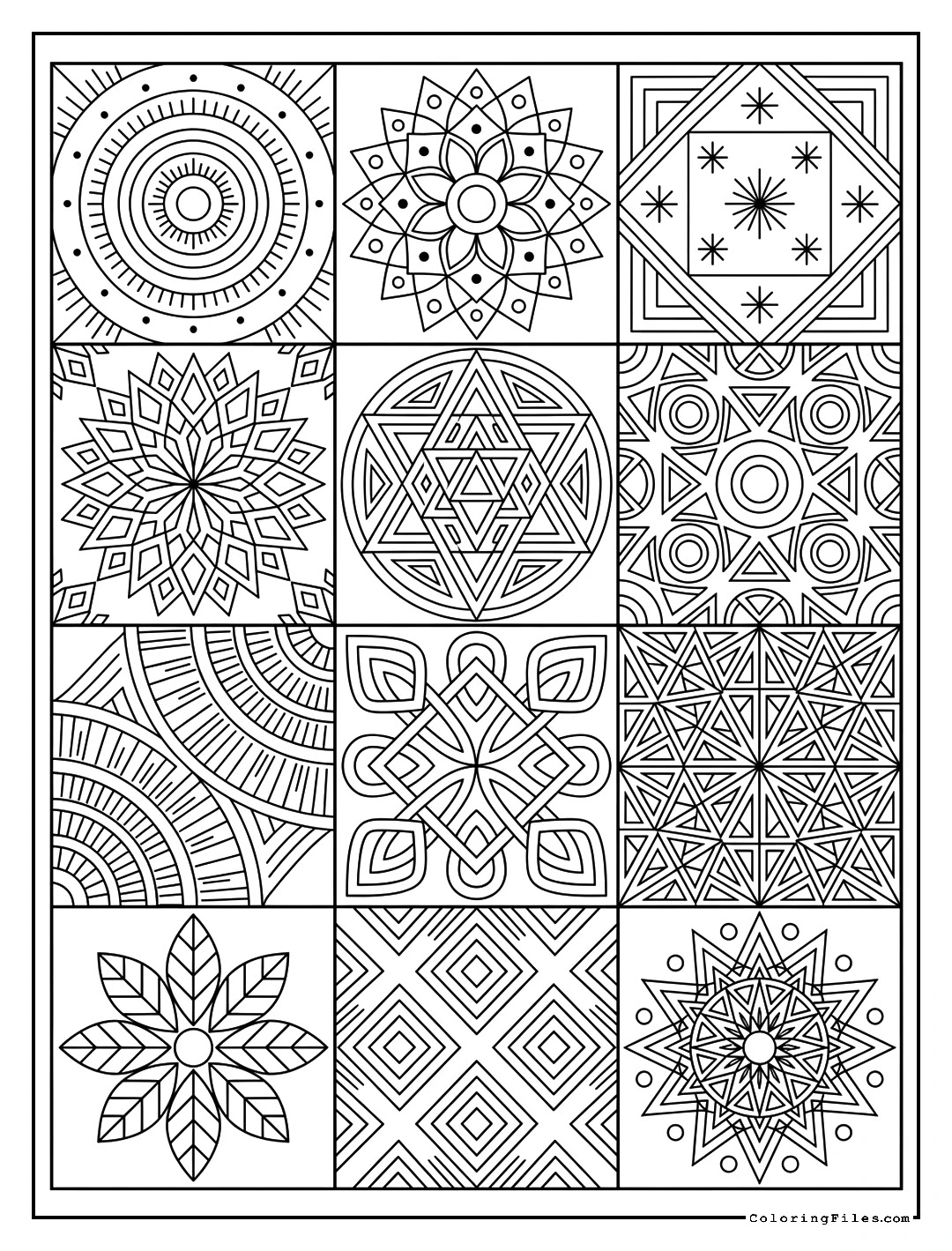
Amzeal
Shade the recessed curves where the overlapping arches meet with dark graphite, making the layered geometric bands pop forward.
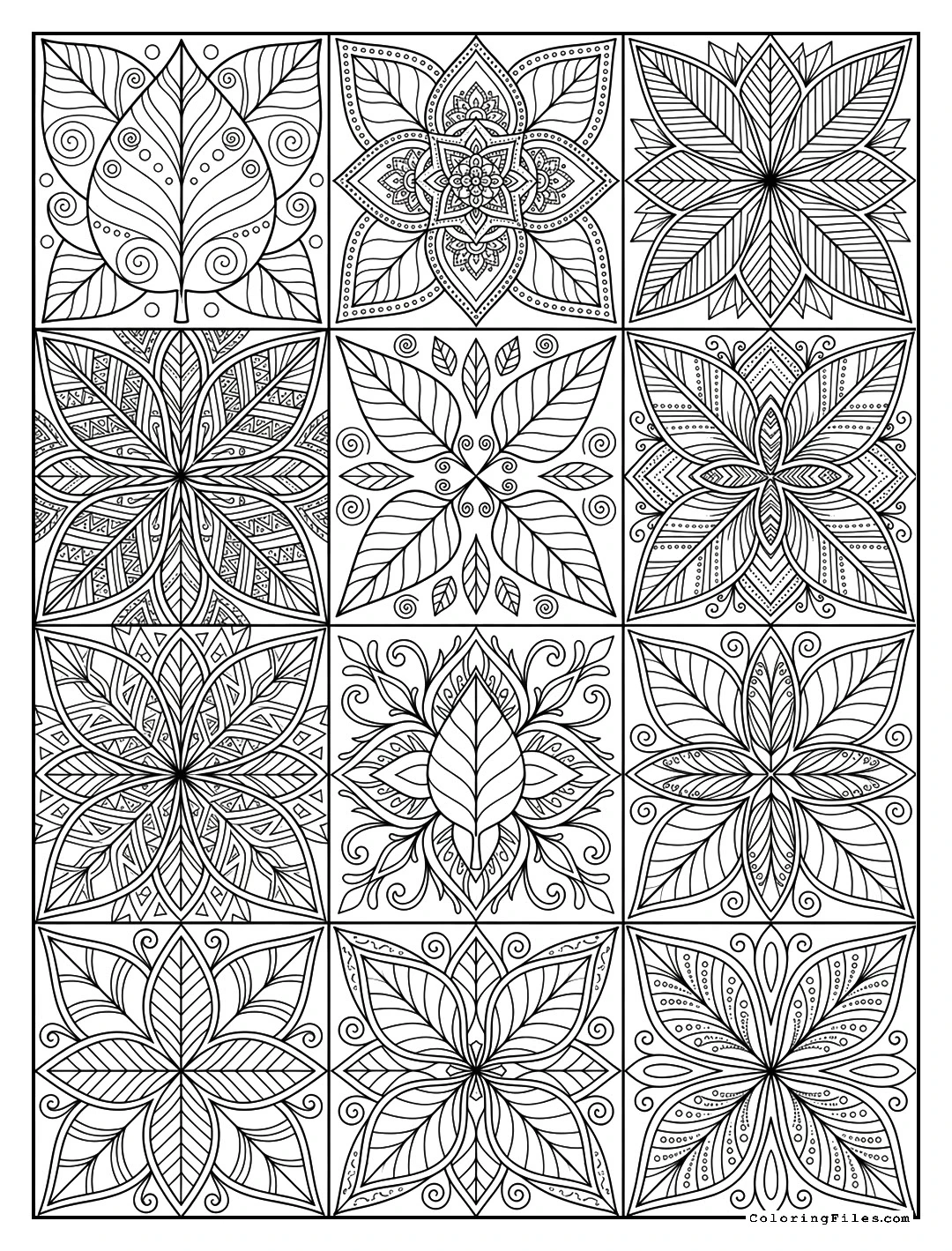
Poke Leaf
Sketch small, overlapping heart-like leaf shapes attached to a central vine. Color the leaves in a vibrant spring green and shade the stem lines with a darker olive marker.
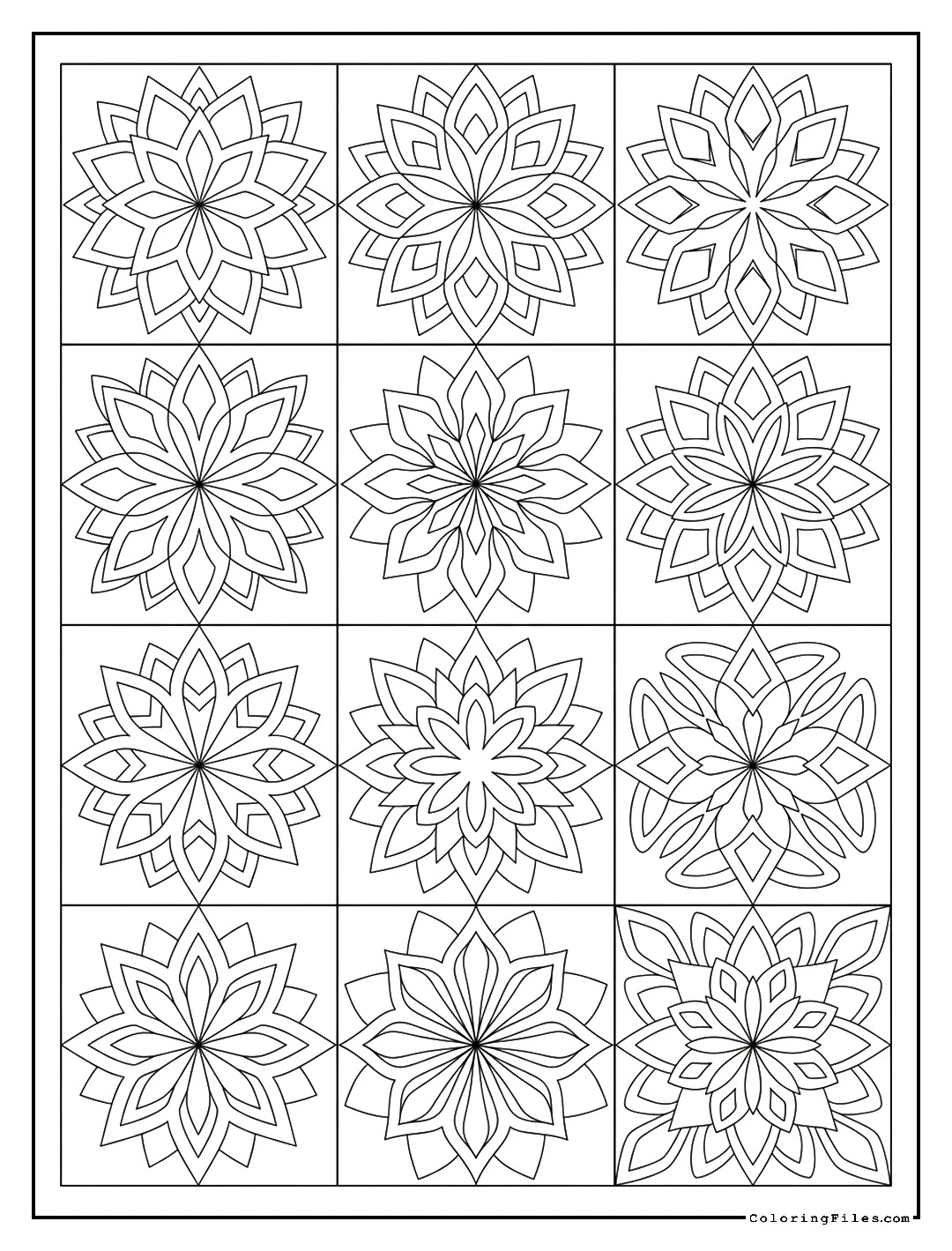
Jonqal
Draw cascading, curved ribbon strands that fold over each other like waves. Color the ribbons in soft sunset gradients of pink, orange, and peach for a warm, cozy feel.
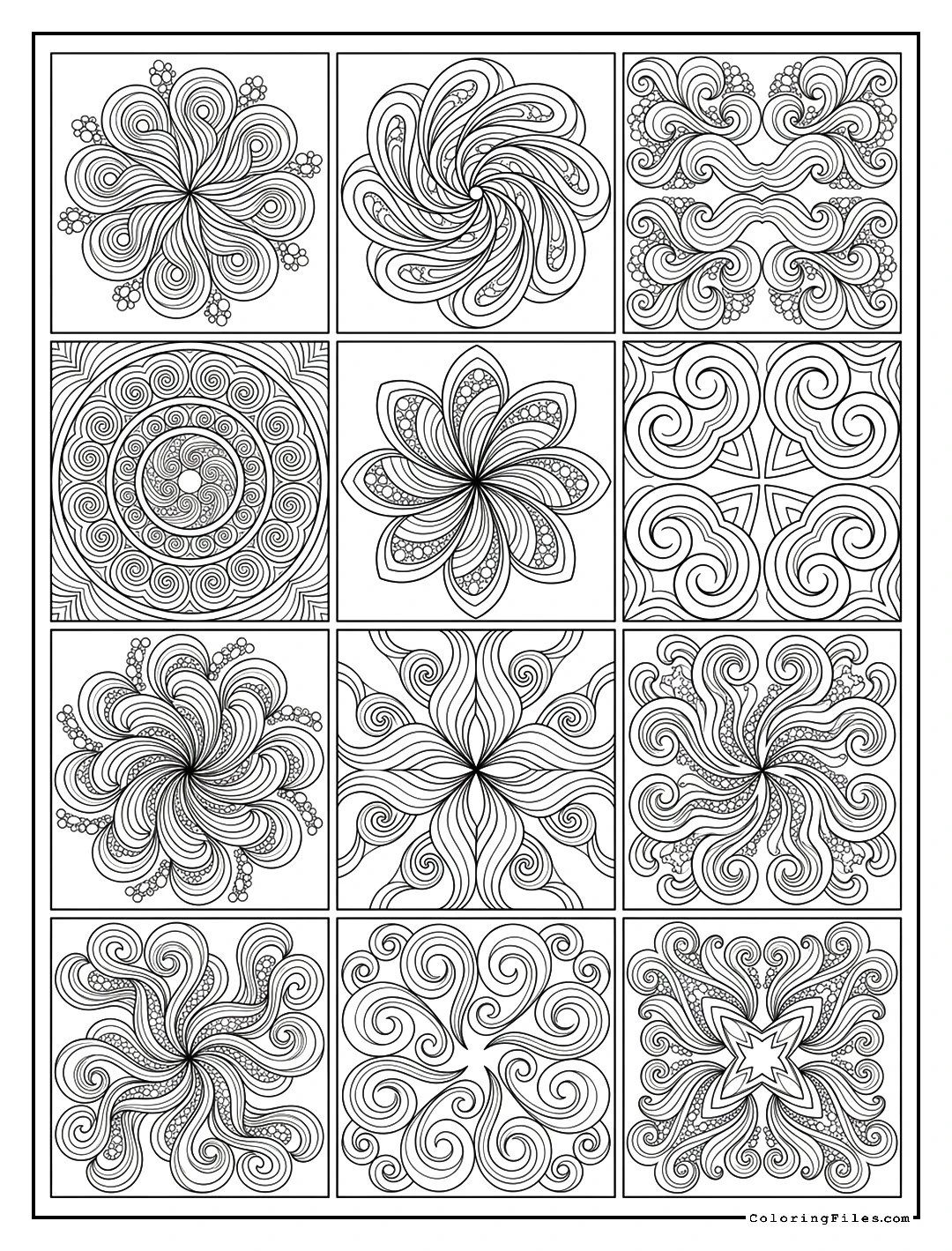
Sand Swirl
Sketch flowing, concentric curved lines that mimic wind-blown sand dunes. Color the sweeping lines in warm desert earthy tones like terracotta, sand, and ochre.
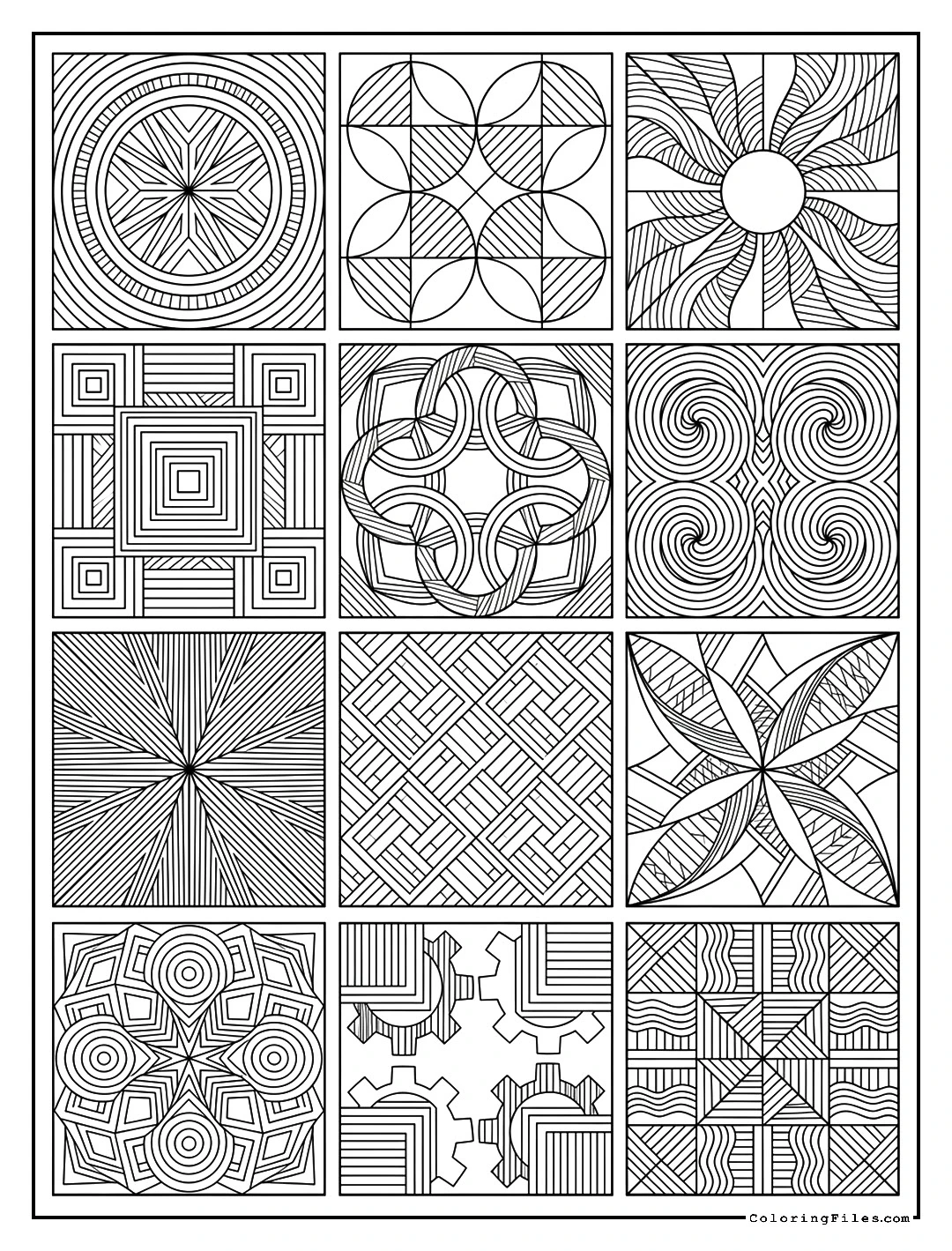
Striping
Fill the area with clean, evenly spaced parallel lines. Color every second stripe with a bold marker while leaving the alternate lines blank for a crisp, graphic look.
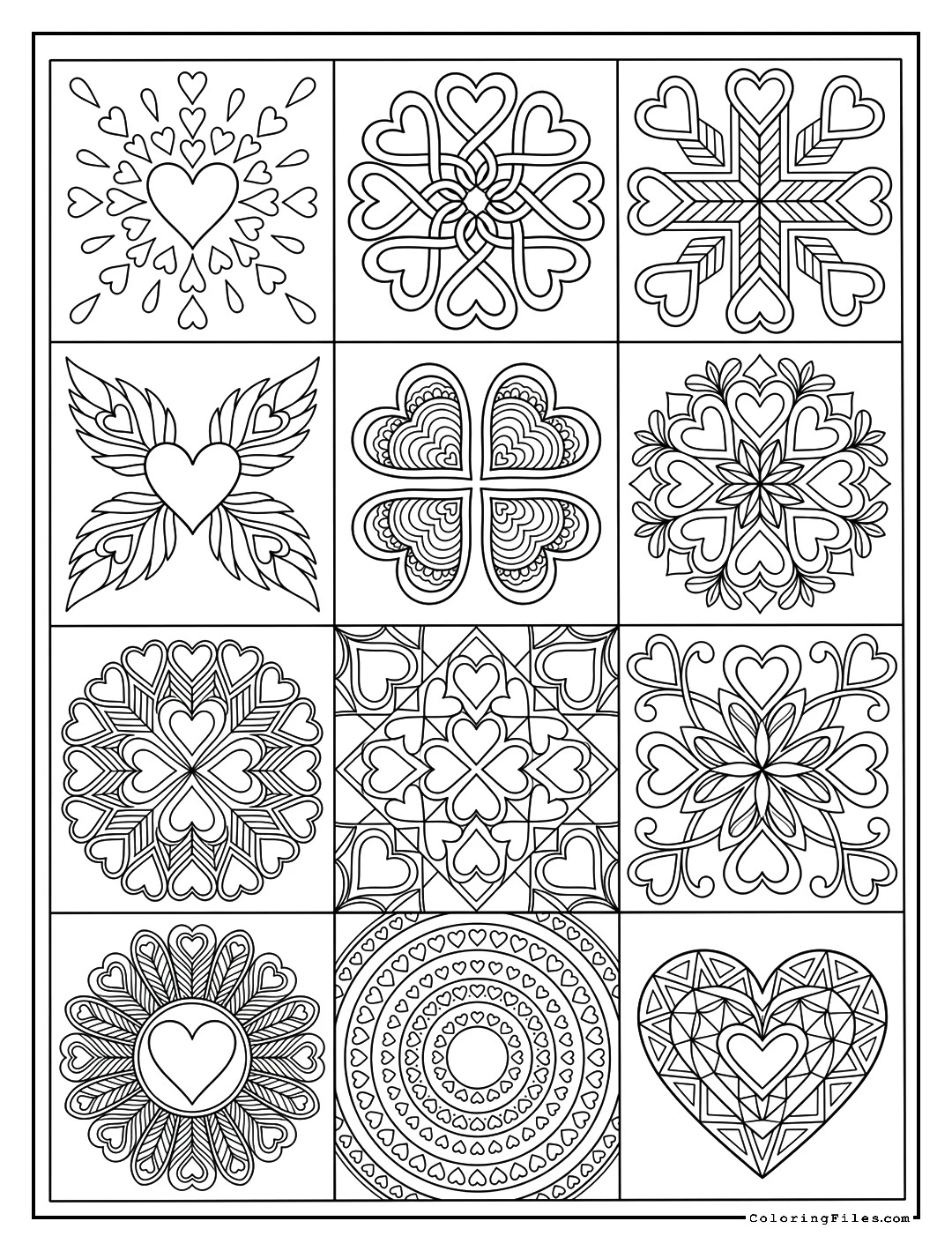
Heartweaved
Draw interlocking heart outlines that weave over and under each other. Color the overlapping hearts in shades of crimson, pink, and magenta for a lovely romantic design.
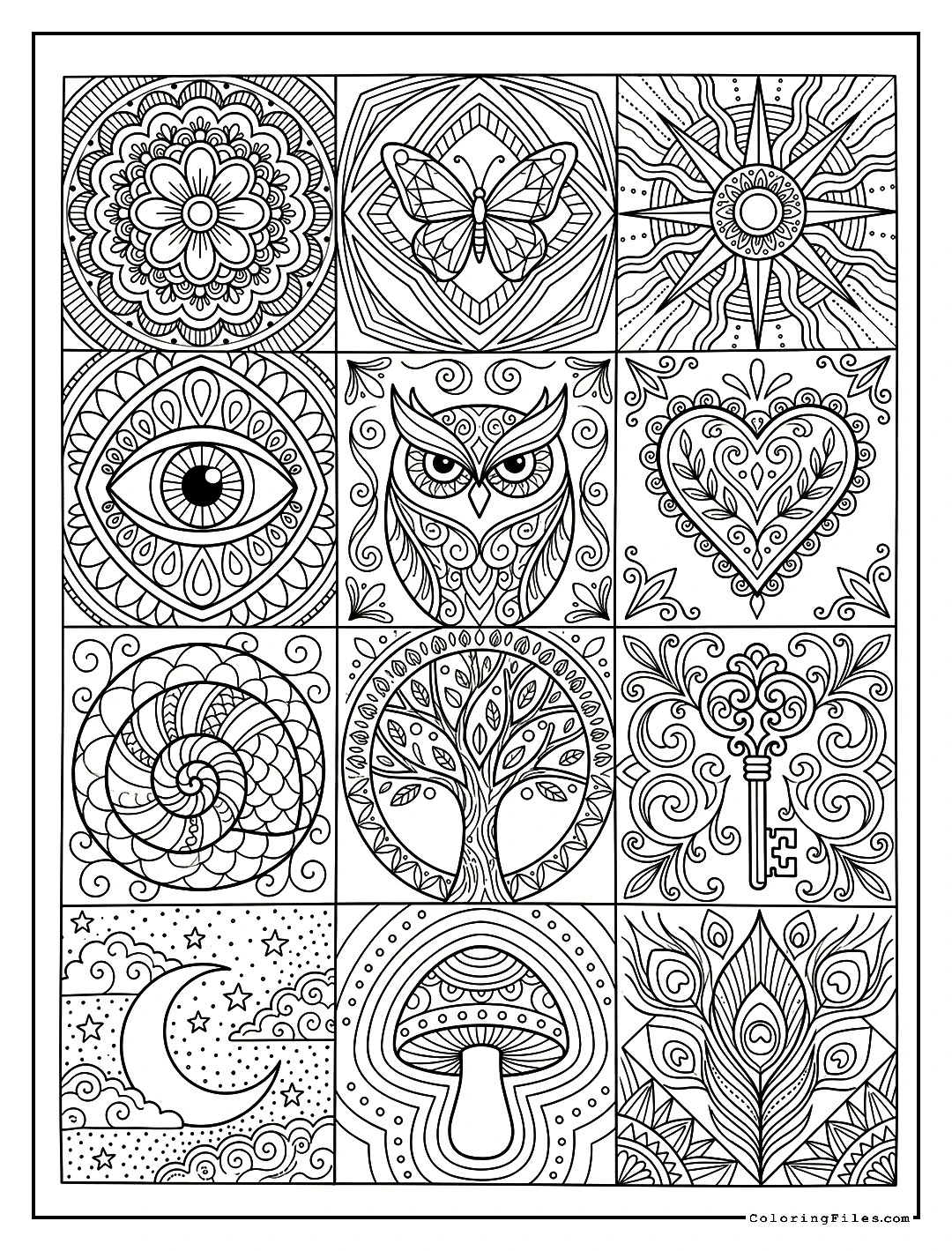
Well
Draw concentric square or circular outlines that cascade inward into a deep well. Color the outer rings dark and fade progressively to a bright white center.
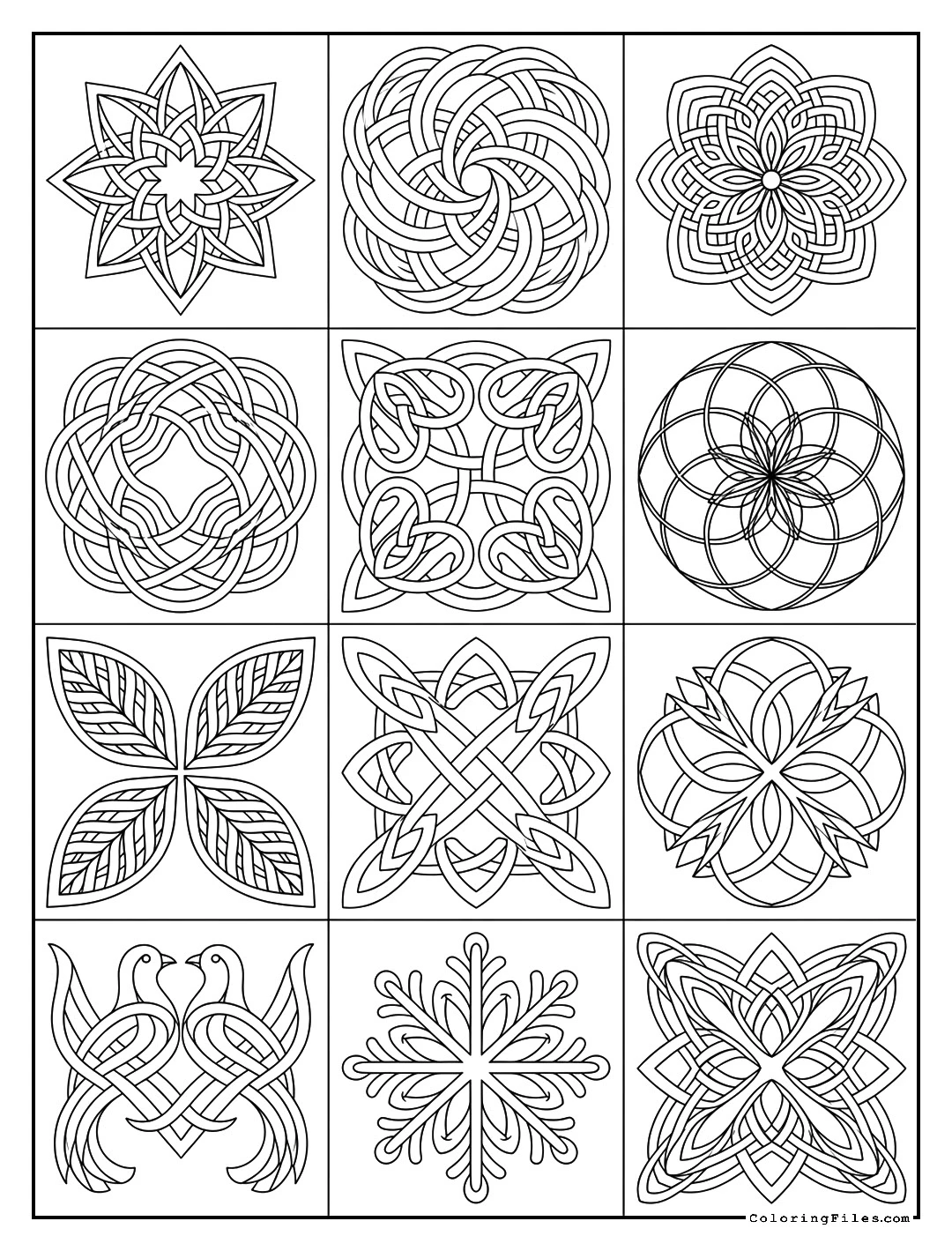
Hollibaugh-Curve
Sketch overlapping curved ribbons that weave fluidly behind one another. Color each curving strip in a different vibrant hue of your choice for a stained glass effect.
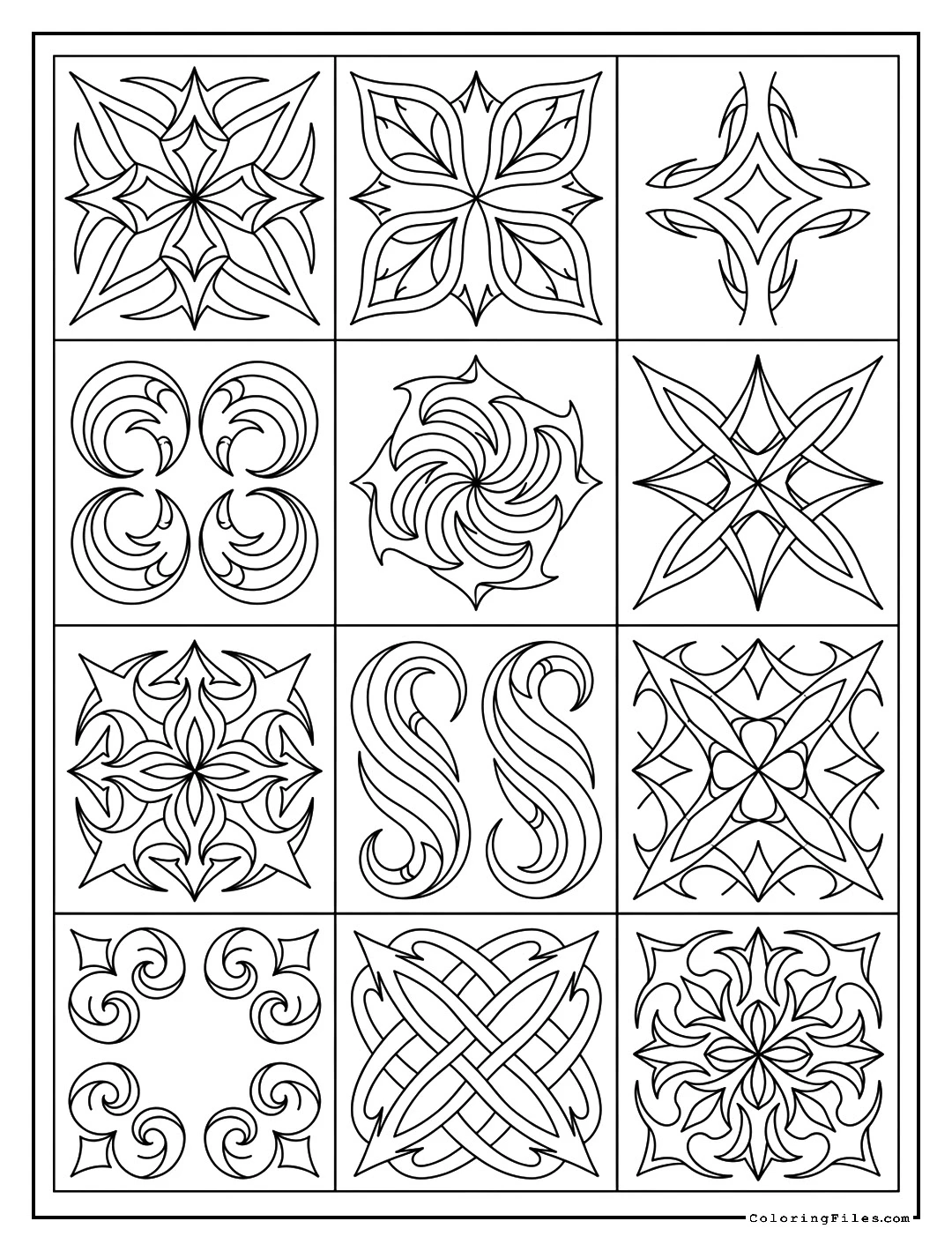
Zingers-Curve
Sketch smooth, sweeping curved shards that layer dynamically across the space. Color the sweeping curves in cool metallic tones like silver, steel blue, and charcoal.
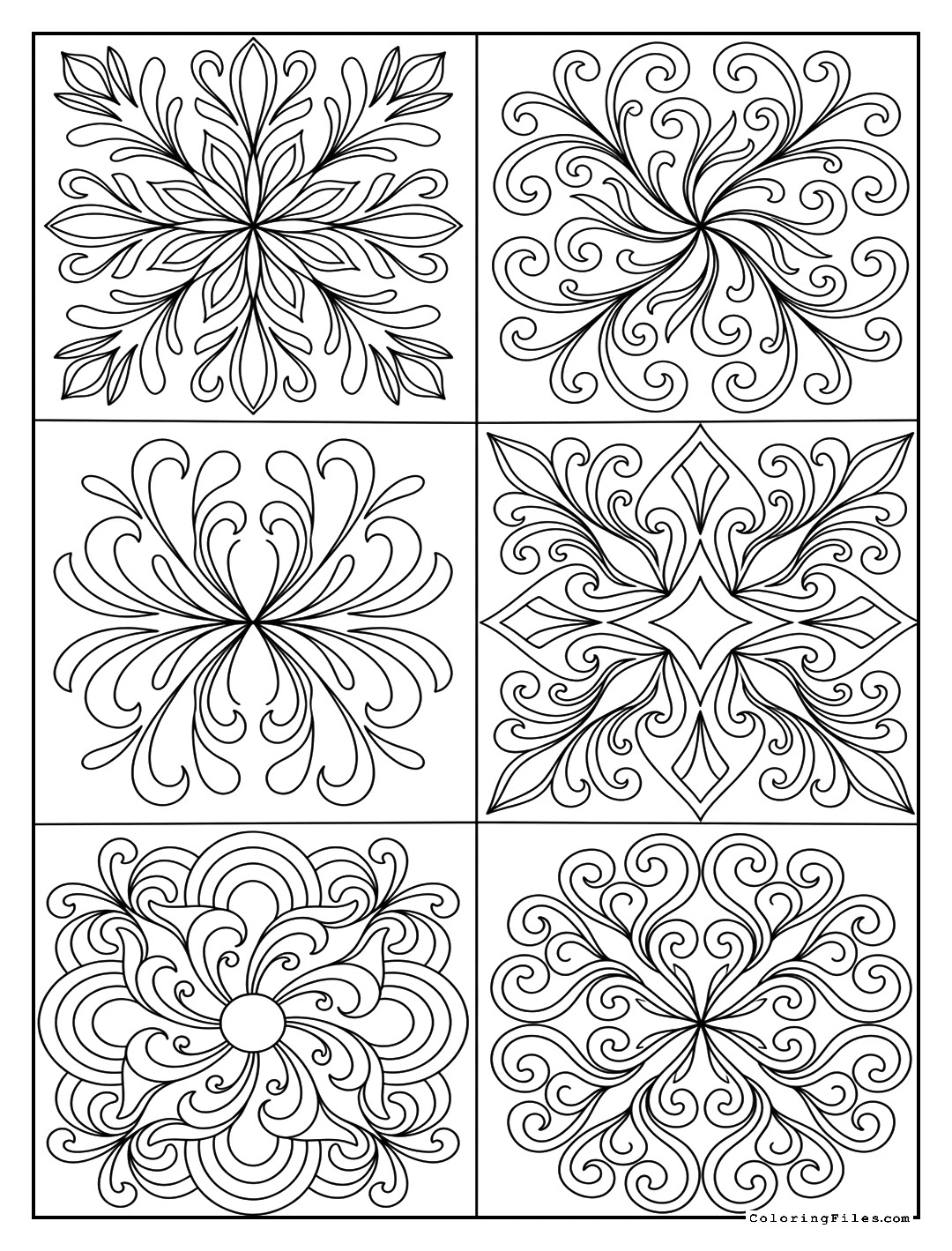
Flux
Shade the inner folds of each teardrop petal with a soft graphite pencil, blending outward with a tortillon to create a smooth, curved dimension.
Guide to Easy Zentangle Patterns for Beginners
Creating beautiful art doesn't require years of training or natural-born talent. The Zentangle Method is an easy-to-learn, relaxing, and fun way to create beautiful images by drawing structured patterns.
This guide breaks down the core principles of Zentangle, provides step-by-step instructions for beginners, and explores the mental benefits of this meditative art form.
What is Zentangle?
Founded by Rick Roberts and Maria Thomas, Zentangle is a form of meditative art. Unlike traditional drawing, it does not focus on a final, realistic picture. Instead, it focuses on the process of drawing itself.
By repeating simple strokes—like lines, dots, circles, and curves—you create intricate, abstract designs called tangles. The method is intentionally designed to be non-representational, meaning there is no "up" or "down," and there are no mistakes.
Step-by-Step Guide: How to Create Your First Zentangle
Traditionally, a Zentangle is created on a 3.5-inch square paper tile using a black fine-liner pen and a graphite pencil for shading. Follow these eight steps to complete your first piece:
1. Gratitude and Appreciation
Before putting pen to paper, take a deep breath. Appreciate the time you have set aside to create, the surface you are working on, and the tools in your hand.
2. The Four Dots
Using your graphite pencil, place a small dot in each of the four corners of your paper tile. They should be roughly a quarter-inch away from the edges.
3. The Border
Connect the four dots with a pencil line. Do not use a ruler; freehand lines give the piece its unique character. It doesn't matter if the lines are slightly curved or shaky.
4. The String
Inside your border, draw a pencil line that divides the square into smaller sections. This line is called a "string." It can be a simple "Z" shape, an "X," or a loop. The sections created by the string will hold your patterns.
5. Tangle
Switch to your black ink pen. Choose a pattern for each section created by your string. Fill each section completely with one pattern before moving on to the next. Focus entirely on one stroke at a time.
6. Shade
Put your pen away and pick up your pencil. Add shading to create depth, dimension, and contrast. Softly apply graphite where lines cross, under overlapping shapes, or along the edges of the border. Use a paper blending stump (tortillon) or your finger to smooth out the gradients.
7. Initial and Sign
Flip your tile over and sign your full name, date, and any thoughts on the back. On the front, add your unique initials or a small monogram in one of the corners.
8. Appreciation
Hold your tile at arm's length. Turn it in different directions. Appreciate the unique piece of art you just created from simple, repetitive strokes.
The Mental Benefits of Zentangle
Zentangle is often referred to as "yoga for the brain" because it provides immediate therapeutic value.
Stress Reduction: The repetitive nature of the strokes induces a state of creative "flow," which lowers cortisol levels and calms the nervous system.
Enhanced Focus: By narrowing your attention to a single line or dot, you train your brain to concentrate on the present moment, similar to mindfulness meditation.
No Mistakes, No Anxiety: Because you draw in ink without an eraser, there is no erasing. If a line goes astray, you simply incorporate it into the next stroke. This removes the pressure of perfectionism.
Frequently Asked Questions
Our innovative platform lets you transform imagination into beautiful line art instantly. Design unique pages by blending intricate mandala patterns, stunning animals, and custom themes tailored to your style. Perfect for artists of all ages seeking relaxation, mindfulness, and endless creative fun.