
Printing coloring pages at home is a convenient way to enjoy line art, mandalas, and intricate illustrations. However, standard printer paper often leads to ink bleeding, paper warping, or dull colors. Choosing the correct paper stock ensures smooth coloring, rich color pay-off, and durability.
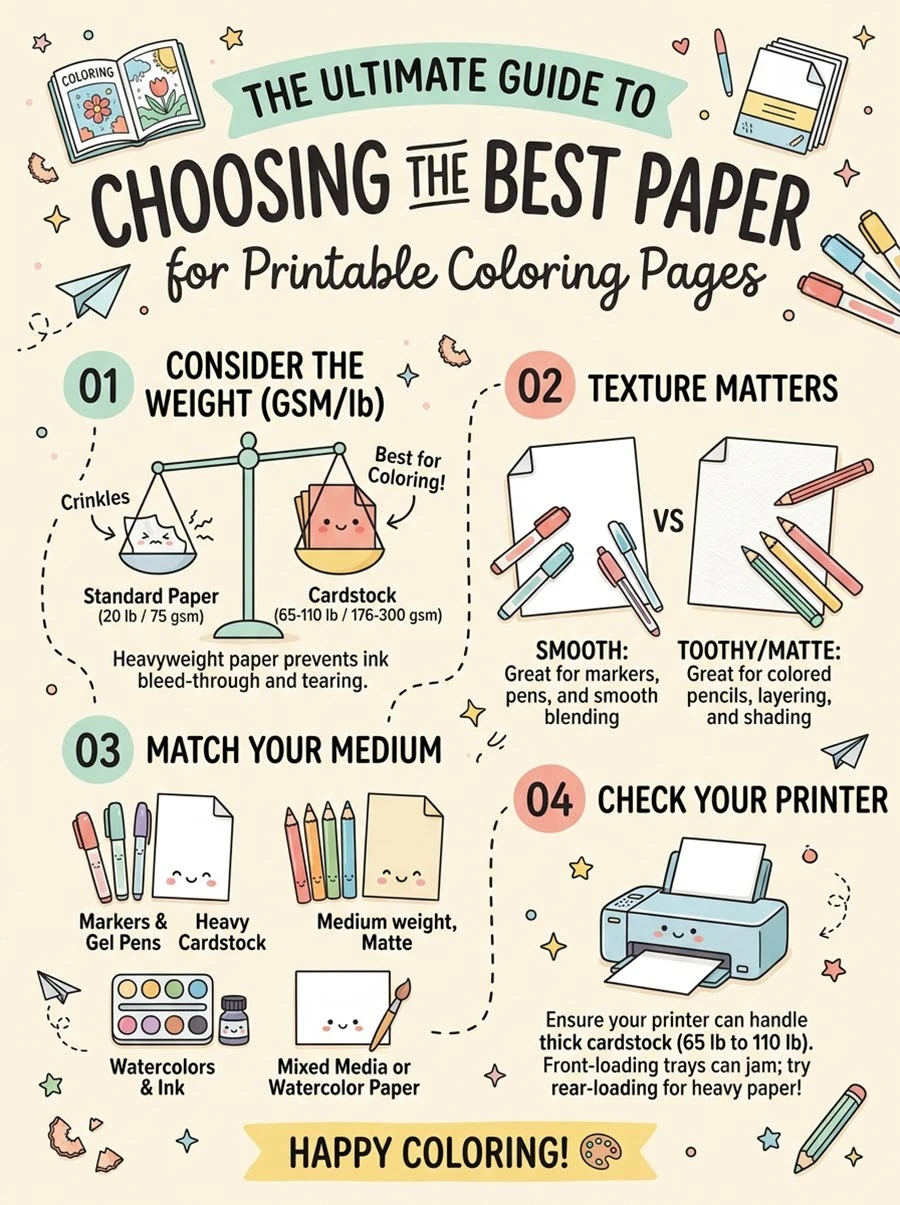
Step 1: Understand Paper Weight and Density
Paper weight determines how sturdy the page feels and how much moisture or pressure it can handle without tearing or bleeding through.
Standard Copy Paper (20 lb / 75–80 gsm):
Best for: Quick test prints, drafts, or basic wax crayon coloring for toddlers.
Drawbacks: Marker ink will bleed through instantly, and pressure from colored pencils can crease or rip the page.
Medium Cardstock / Heavyweight Paper (65–80 lb / 175–215 gsm):
Best for: The ideal middle ground for colored pencils, gel pens, fine-liners, and light marker usage.
Benefits: Fits easily in standard home inkjet/laser printers without jamming while offering strong resistance to bleed-through.
Heavy Cardstock (90–110 lb / 240–300 gsm):
Best for: Alcohol markers (Copic, Ohuhu), watercolors, and heavy layering.
Note: Verify your home printer’s maximum paper weight capacity before loading heavy cardstock to prevent paper jams.
Step 2: Select the Right Surface Finish & Texture
The finish of the paper dictates how ink adheres and how smoothly coloring tools glide over the page.
Smooth / Hot-Press Finish:
Smooth surfaces allow alcohol markers and fine-liner pens to blend seamlessly without fraying marker nibs.
Ideal for detailed designs, mandalas, and sharp line art.
Vellum / Tooth Texture (Cold-Press):
Paper with a light "tooth" or texture grips pencil pigments effectively, making it perfect for blending and shading with colored pencils.
Glossy Finish (Avoid):
Avoid glossy photo paper for coloring. Liquid inks smudge easily on glossy surfaces, and wax/oil colored pencils cannot adhere properly.
Step 3: Match Paper to Your Preferred Medium
-
Colored Pencils: For layering and smooth shading, opt for medium cardstock (160–200 gsm) with a slightly textured or vellum finish. The subtle "tooth" on the paper helps hold the pigment layers effectively.
-
Alcohol Markers (Copic, Ohuhu, etc.): To prevent marker nib wear and minimize ink bleed-through, heavyweight smooth cardstock (200–250 gsm) is ideal. Its ultra-smooth surface allows for seamless blending.
-
Gel Pens and Fine-Liners: Use smooth, bright white paper (120–160 gsm) to ensure quick ink drying, prevent smudging, and maintain clean, sharp line work.
-
Watercolors and Gouache: To achieve high water absorption and prevent page buckling or warping, always choose dedicated watercolor paper (Cold Press - 300 gsm).
Step 4: Choose the Ideal Paper Brightness and Color Tone
Bright White (98–100 Brightness):
Provides maximum color contrast, making vivid shades and neon hues pop. Essential for clean digital line art.
Natural / Off-White / Cream:
Softens visual contrast and gives a vintage look. Excellent for rustic or botanical coloring pages printed with softer gray line work.
Step 5: Printer Compatibility and Setup Tips
Inkjet vs. Laser Printers:
Inkjet printers work wonderfully with absorbent cardstock and watercolor paper.
If using alcohol markers over inkjet prints, test first—certain inkjet inks can smear when reactivated by marker solvents. Laser toner line art stays crisp and water/alcohol resistant.
Printer Settings:
Adjust your printer settings to "Heavyweight" or "Cardstock" mode and select "High Quality" print output to ensure crisp lines without excess ink saturation.
Rear Feed Tray:
Use your printer's manual rear feed slot (if available) for thicker cardstock to keep the paper path straight and prevent jamming.
Summary Checklist for Printing
Pick your coloring tool: Pencils, gel pens, or markers.
Select the paper weight: 160–220 gsm works best for general use.
Verify finish: Smooth for markers, subtle tooth for pencils.
Adjust printer settings: Match the paper thickness profile before printing.